
Energy Efficiency / Customer Journey Stage 05 / Validation
Validation
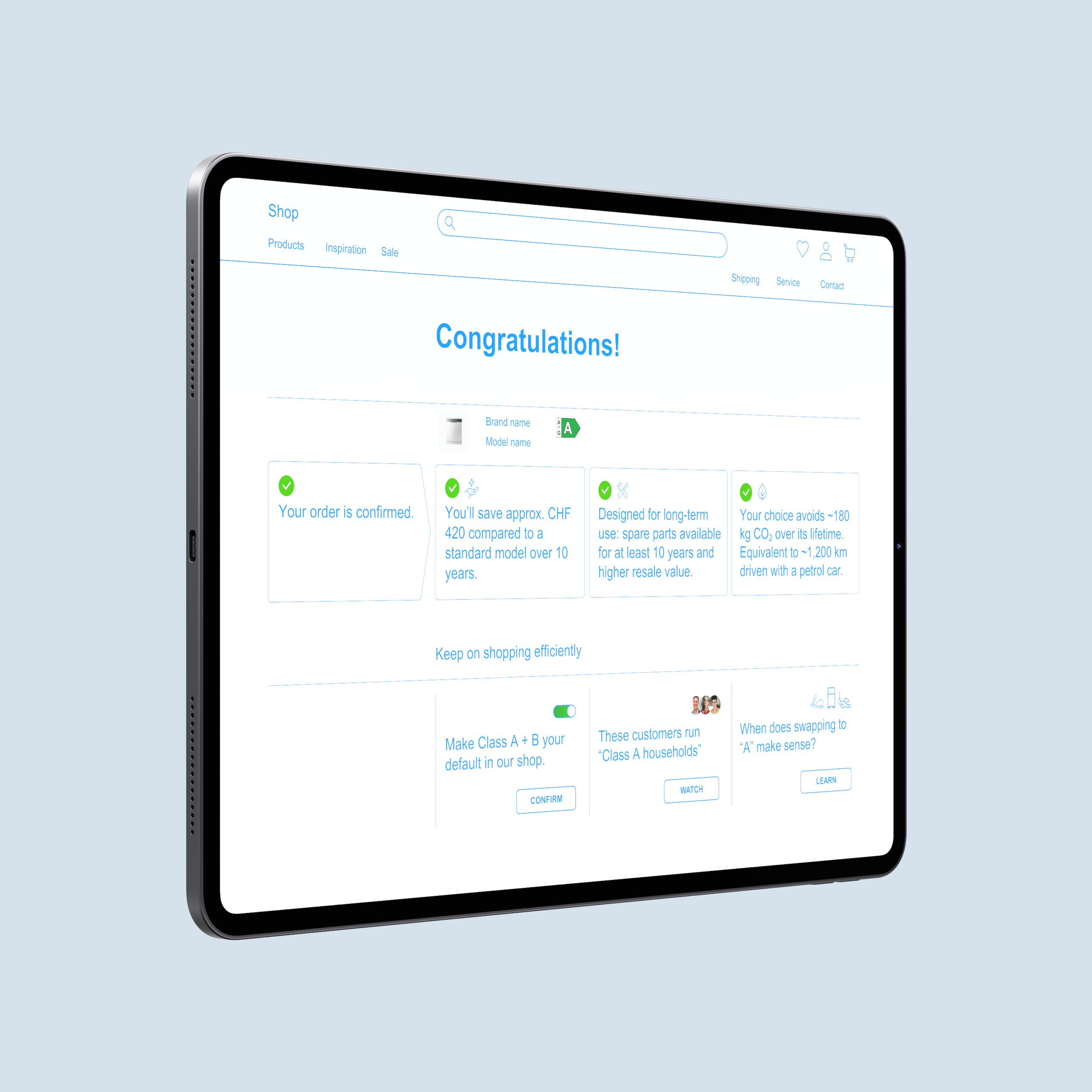
Use this pattern to validate efficient purchase decisions after checkout by making benefits visible, while inviting users to continue building efficient consumption habits.
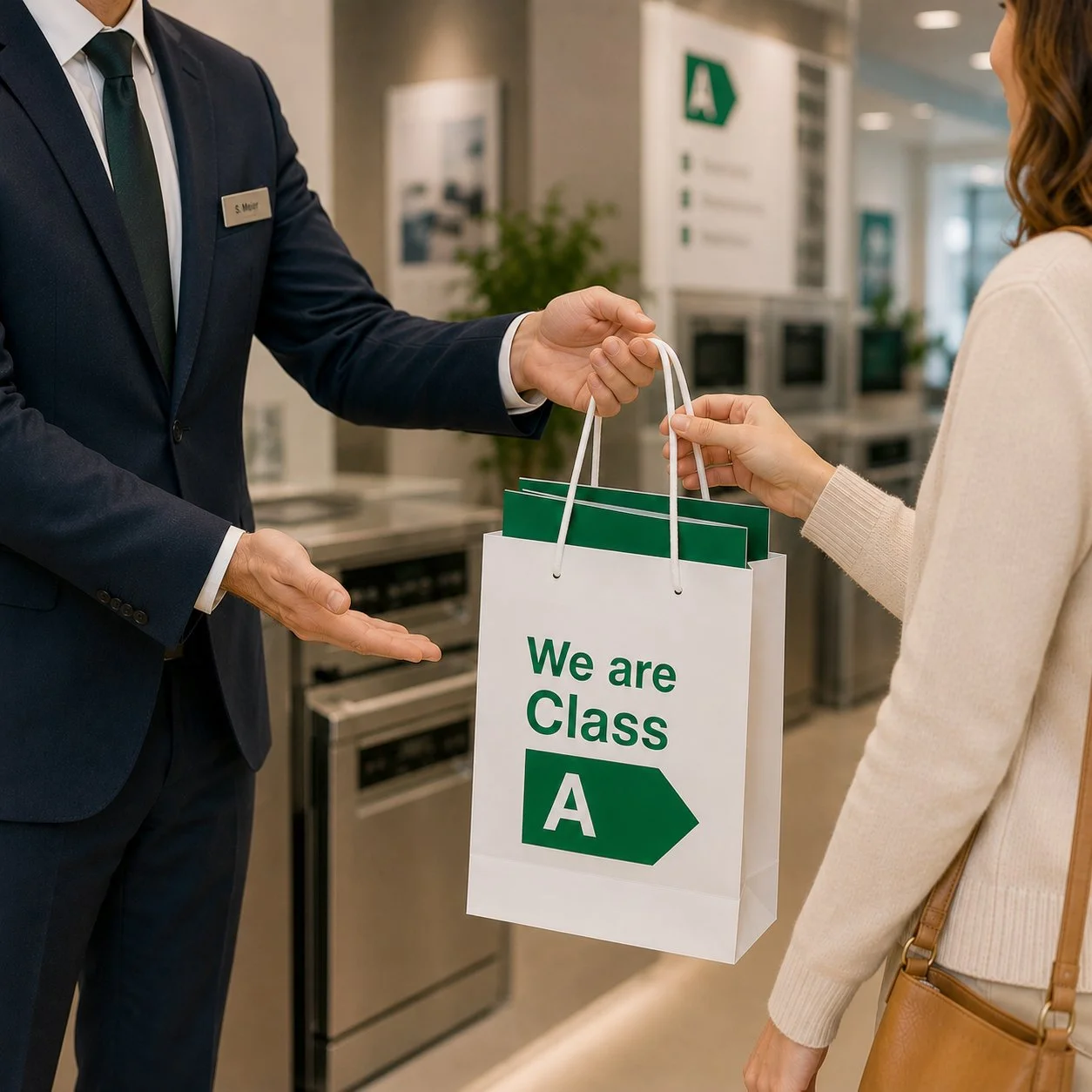
Why? After checkout, users are highly receptive to confirmation. This strengthens future habits and reduces moral licensing — the tendency to offset sustainable actions with less sustainable ones later.
How it works
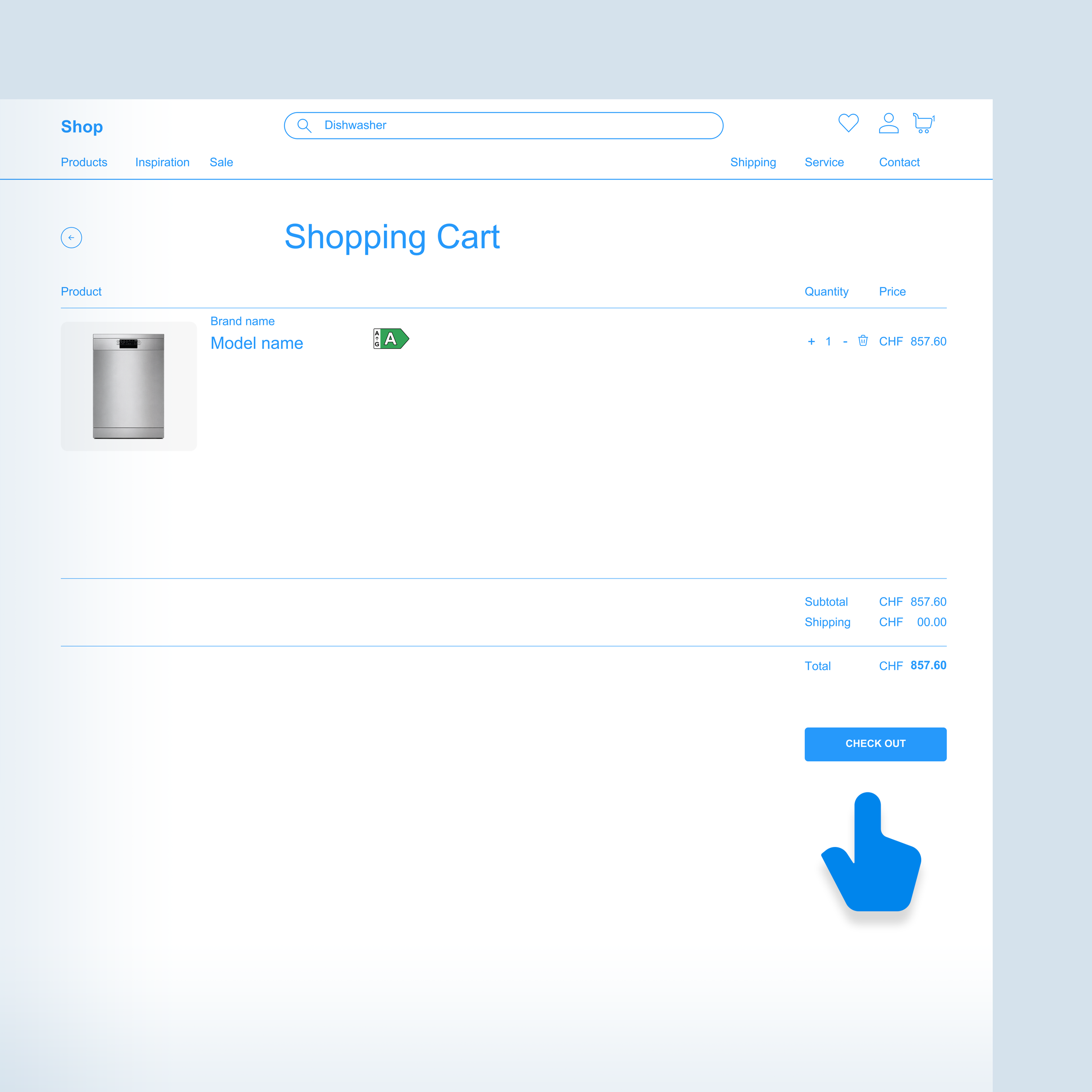
After completing the purchase of a highly efficient product (e.g. Class A or B), the order confirmation page displays a set of concise benefit cards.
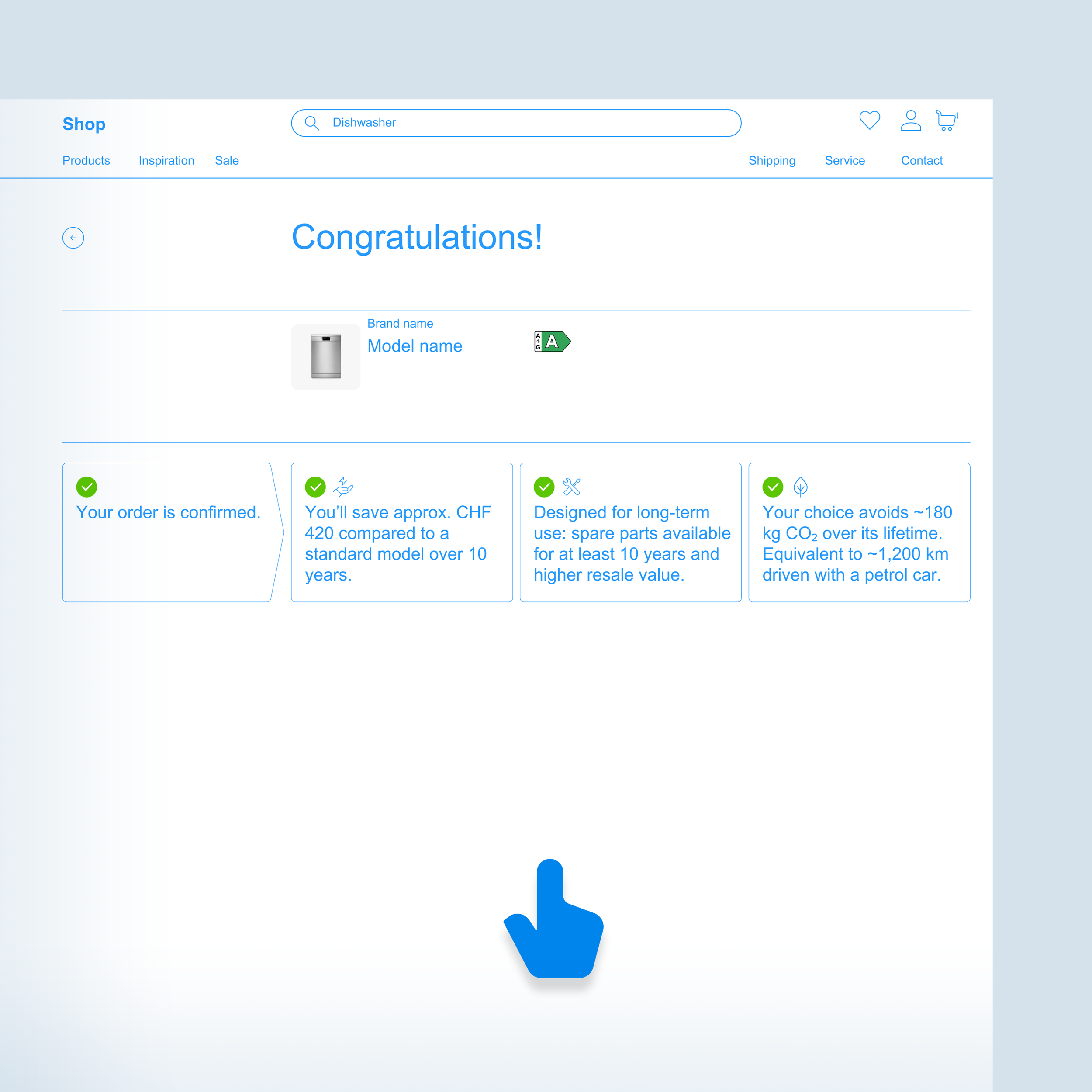
These may include: energy cost savings, repairability and durability benefits or reduced environmental impact.
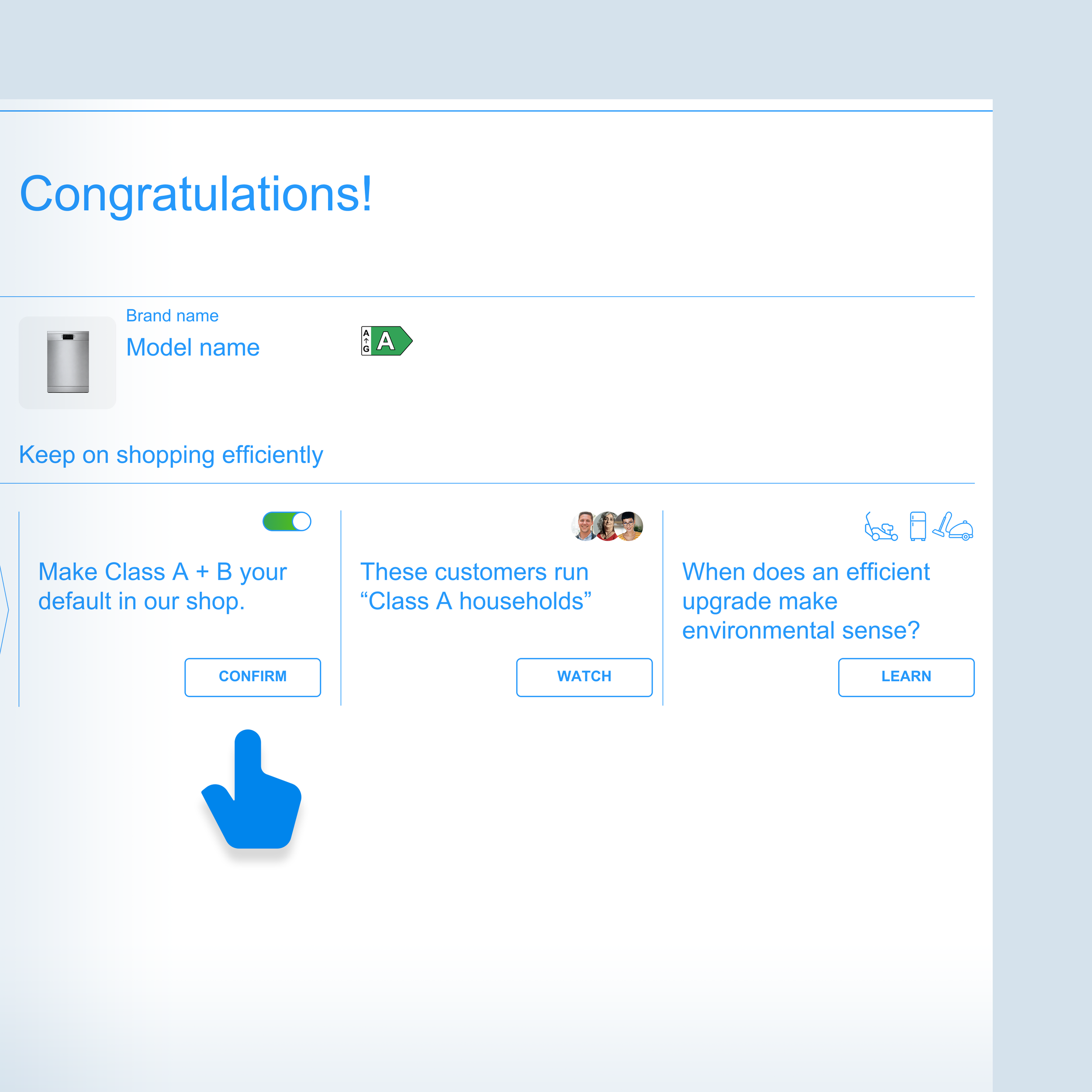
More actionable options may include: Making efficient products the default shopping preference, exploring examples from other efficient households or learning when replacing existing appliances makes environmental sense.
Explore and download this pattern for free
Persona-Based Evaluation
Based on AI-assisted Personas

Progressive Purchaser
Initial perception
Notices the confirmation page immediately because it goes beyond a standard order confirmation. The combination of savings, durability and environmental benefits feels relevant and contemporary rather than purely functional.
Interpretation
Sees the purchase as a smart decision. The cost savings provide rational justification, while the repairability and environmental benefits add additional value without feeling moralizing.
The option to make Class A and B products the default is perceived as a convenient personalization feature. Community content and learning opportunities may attract interest if they are concise and well curated.
Effect on decision
Strengthens confidence in the purchase
Creates a feeling of having made a future-oriented choice
Increases appreciation of efficiency beyond energy savings alone
Makes future efficient purchases more likely
Strengthens engagement with the retailer
Friction / risks: Low to Medium
May ignore community or educational content if it feels generic or promotional. Environmental claims should remain concrete and evidence-based, as overly simplified comparisons can reduce credibility.




Cross-Persona Evaluation
Perceptibility: High
The confirmation page appears immediately after purchase and places the validation messages prominently within the user’s attention area.
Comprehensibility: High
The core message is simple: you made a good choice and here is why. Cost, durability and environmental benefits are easy to understand.
Motivational Fit
Very High: Committed Caretaker
High: Casual Conscious Consumer, Progressive Purchaser
Medium: Savvy Economizer
Low to Medium: Novelty Seeker
Decision Impact
Strong on post-purchase confidence and future behaviour. Unlike pre-purchase patterns, the effect is less about changing the current decision and more about reinforcing future efficient purchasing habits, retailer trust and customer loyalty.
Risk of Backfire: Low
The purchase has already been completed, reducing perceptions of manipulation. Risk increases only if savings or environmental claims appear exaggerated or unsupported.
Expert Evaluation
Score: 9 / 14
**************
Cross-Expert Summary
Validation reached medium-high acceptance. Experts saw post-purchase confirmation as a low-risk moment because it does not endanger conversion. It can reinforce efficient choice, provide usage guidance and connect the purchase to long-term value.
The pattern should remain lightweight with a maximum of two to three teasers. It works best as a short confirmation with optional next steps, not as a educational module. Manufacturers may find it especially useful for extending brand promises around efficiency, durability and quality into the ownership phase.
“A set of modules tailored to specific customer groups makes sense. The toggle could work particularly well in B2B environments, where purchasing policies may require buyers to select only efficient products in support of ESG targets.”
— UX Strategist, Manufacturer
Project partners
Funding

Studio Peter Post × Petra Esveld
Studio Peter Post × Petra Esveld is a design studio focussing on ux- and service design for the circular economy and branding for public institutions, NGOs and Non-Profits.
Development

SwissEnergy
SwissEnergy is the Swiss Federal Council’s programme for supporting voluntary measures to improve energy efficiency and promote renewable energy.

Circular-Experience.org
Circular-Experience.org is the circular economy design practice of Studio Peter Post × Petra Esveld, specialising in service design and user experience design for sustainable products and systems.