Energy Efficiency / Customer Journey Stage 06 / Reinforcement
Reinforcement
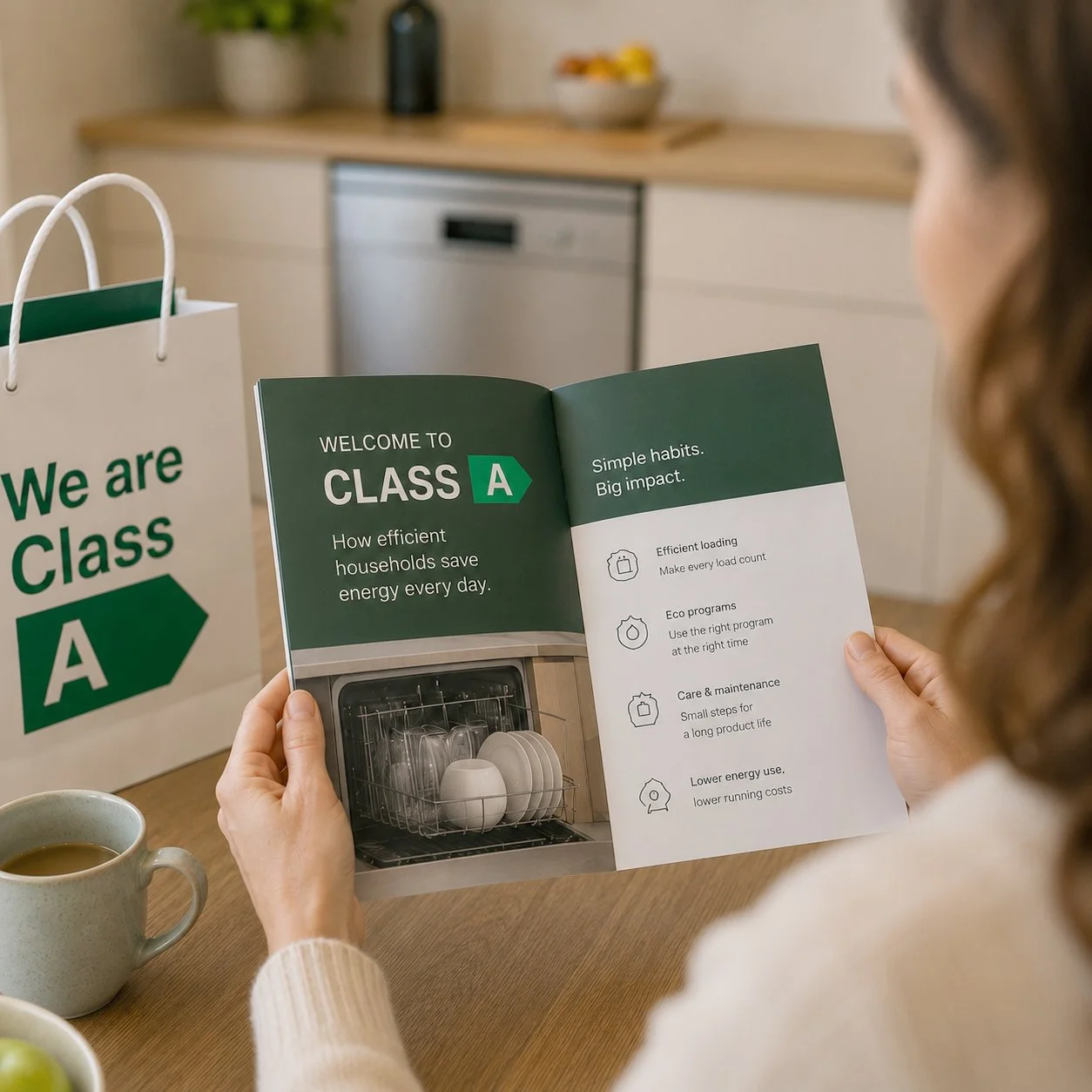
Use the period between purchase and delivery to reinforce efficient product ownership and encourage energy-saving usage habits.
Why? While many users only read manuals when a problem occurs, the period between purchase and delivery is a unique opportunity to turn energy efficiency from a purchase criterion into a daily usage habit.
How it works
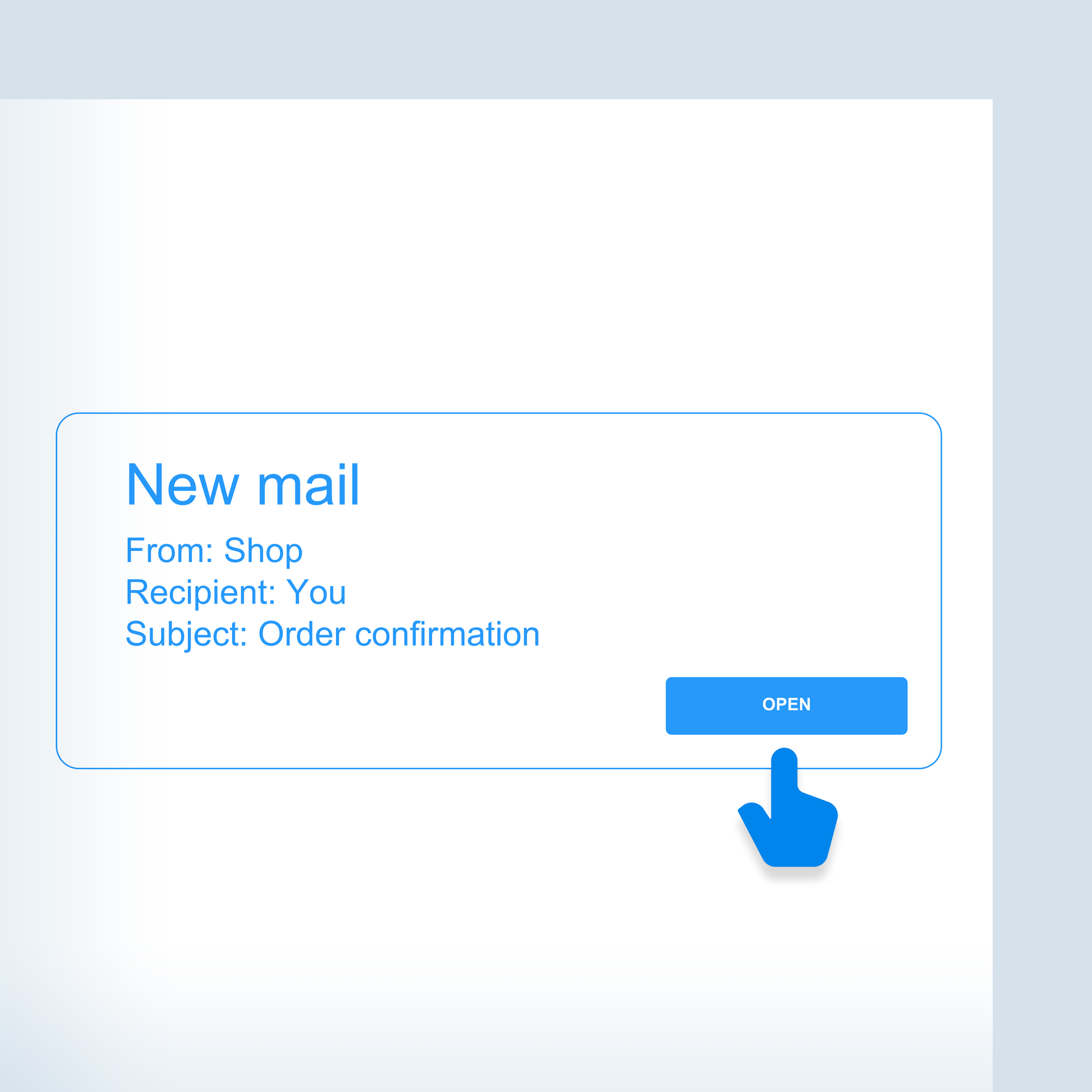
The user receives an order confirmation email.
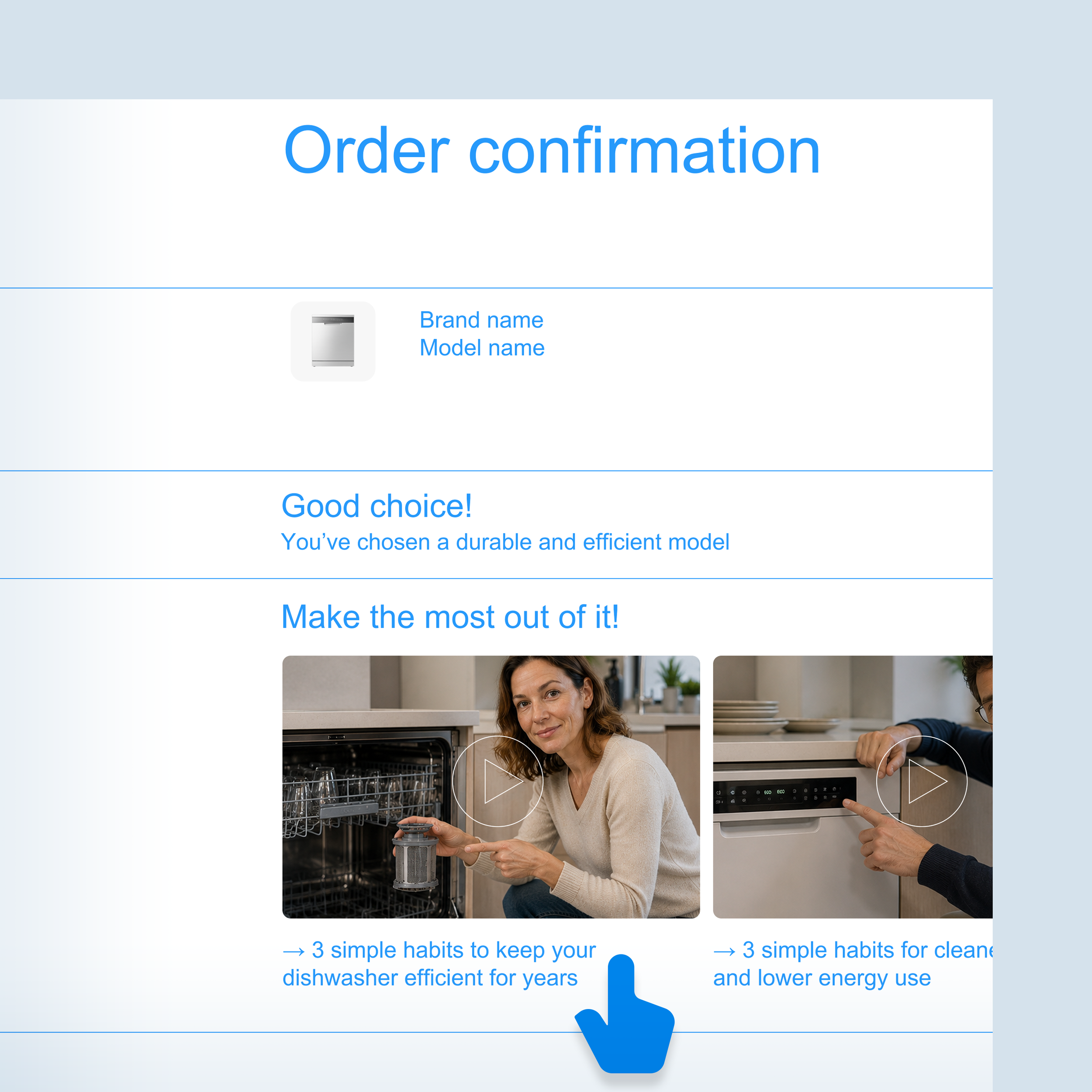
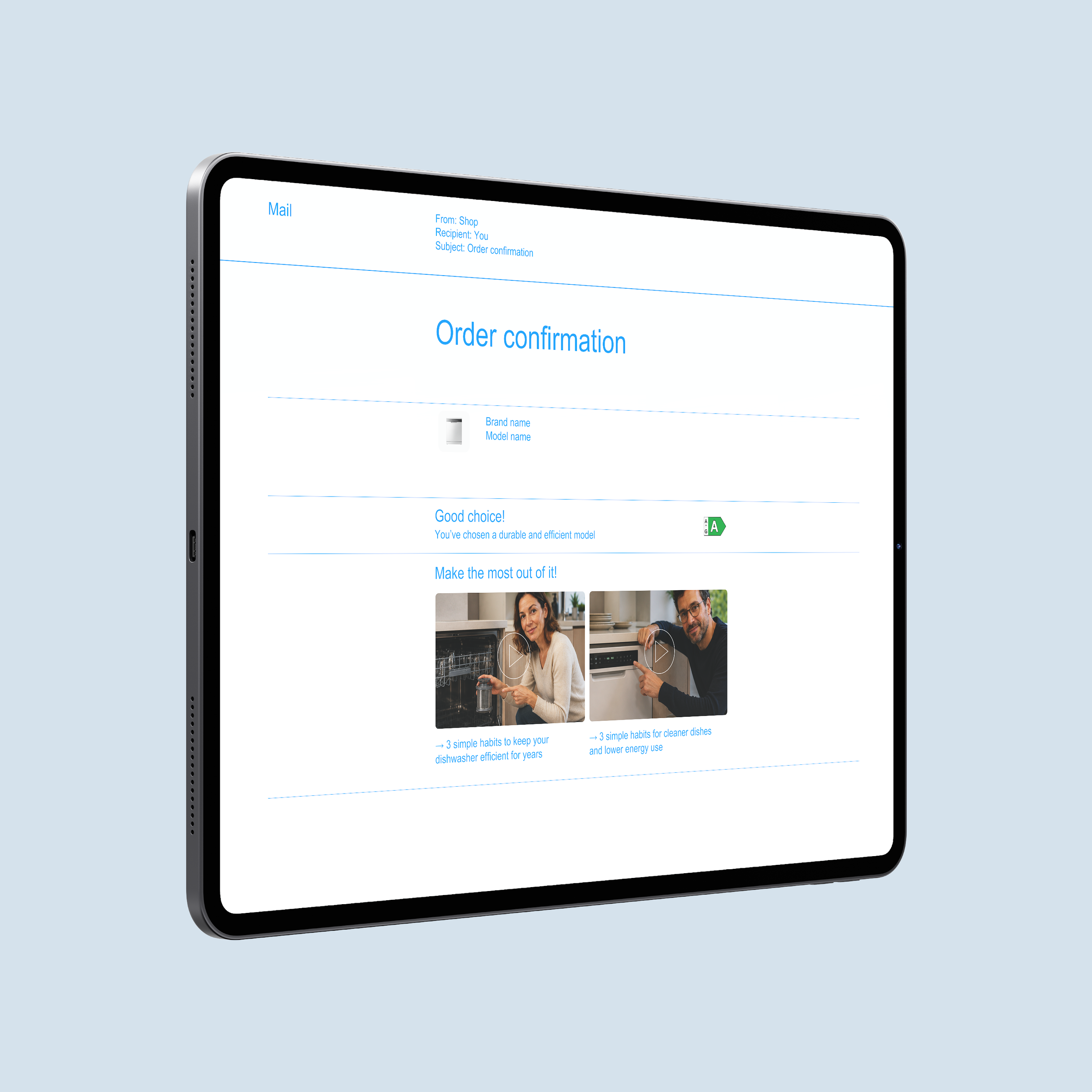
The confirmation reinforces the purchase decision by additional content that invite the user to learn simple maintenance habits before the product arrives.
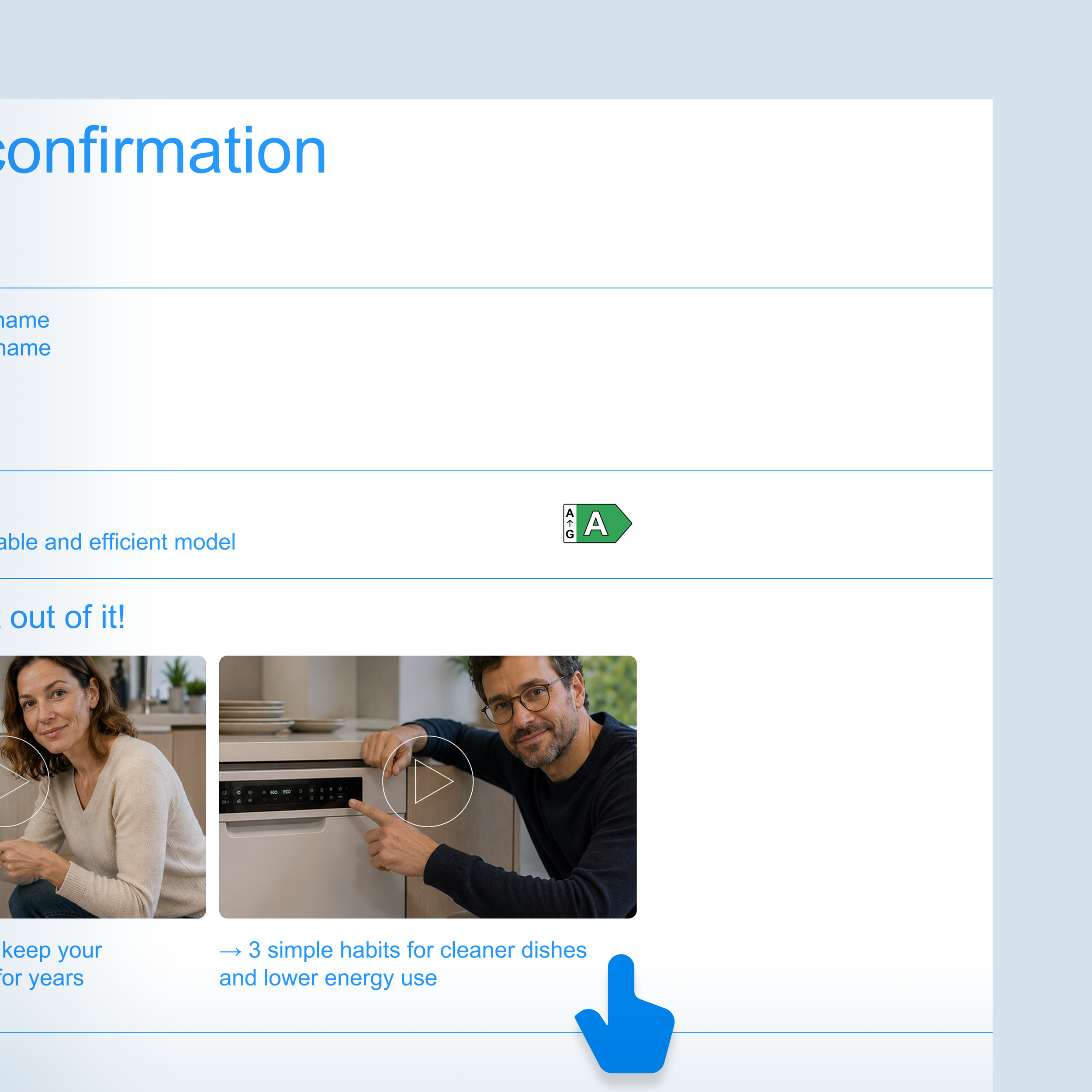
A second content module focuses on efficient everyday habits, as user behaviour plays a major role in determining the actual energy and resource consumption of the product.
Explore and download this pattern for free
Persona-Based Evaluation
Based on AI-assisted Personas

Committed Caretaker
Initial perception
Immediately notices and appreciates the message. The confirmation validates a choice she already feels good about and the educational content is perceived as genuinely helpful.
Interpretation
Understands the content as support rather than marketing. The efficiency message aligns with her values and reinforces her identity as a responsible consumer.
Effect on decision
Strengthens satisfaction with the purchase
Increases trust in the retailer or manufacturer
Encourages engagement with maintenance content
Increases likelihood of adopting efficient usage habits
Supports long-term product care and repair behaviour
Friction / risks: Very Low
The content arrives at the right moment and feels useful rather than promotional. Additional practical tips are welcomed.




Cross-Persona Evaluation
Perceptibility: High
Order confirmations are typically opened and read. The reinforcement message and content teasers appear in a context with little competing information.
Comprehensibility: High
The relationship between efficient ownership, maintenance and lower energy consumption is easy to understand. The content requires little explanation.
Motivational Fit
High: Committed Caretaker, Casual Conscious Consumer
Medium to High: Progressive Purchaser
Medium: Savvy Economizer
Low to Medium: Novelty Seeker
Decision Impact
Limited influence on the completed purchase itself, but potentially strong influence on post-purchase behaviour, product care and long-term energy consumption. The pattern is particularly valuable because it extends efficiency communication beyond the point of sale.
Risk of Backfire: Low
The content is delivered after the purchase decision and provides practical value. Risk increases only if educational modules become overly promotional or irrelevant.
Expert Evaluation
Score: 12 / 14
**************
Cross-Expert Summary
Experts rated this pattern very highly because it uses a moment of naturally elevated attention: the period between purchase and delivery. Unlike many other patterns, it does not interfere with product selection or checkout, but extends the customer relationship into the ownership phase.
Several experts noted that efficient usage, maintenance and care often have a greater impact on real-world energy consumption than the purchase decision itself. Manufacturers in particular highlighted that users frequently overlook eco programs and product-specific efficiency features after installation.
The pattern was seen as especially attractive because much of the required content already exists within organizations. Acceptance increased when the information was tailored to the purchased product and presented as helpful guidance rather than education or persuasion. Experts also emphasized that the content should remain concise and modular to avoid overwhelming users before delivery.
“Very good pattern. These products often require explanation, and eco programs are frequently overlooked or not used after installation simply because users are unaware of them. It also strengthens durability, our core brand value.”
— Head of Innovation, Manufacturer
Project partners
Funding
Studio Peter Post × Petra Esveld
Studio Peter Post × Petra Esveld is a design studio focussing on ux- and service design for the circular economy and branding for public institutions, NGOs and Non-Profits.
Development
SwissEnergy
SwissEnergy is the Swiss Federal Council’s programme for supporting voluntary measures to improve energy efficiency and promote renewable energy.

Circular-Experience.org
Circular-Experience.org is the circular economy design practice of Studio Peter Post × Petra Esveld, specialising in service design and user experience design for sustainable products and systems.