
Energy Efficiency / Customer Journey Stage 02 / Lifetime Cost Teaser
Lifetime Cost Teaser
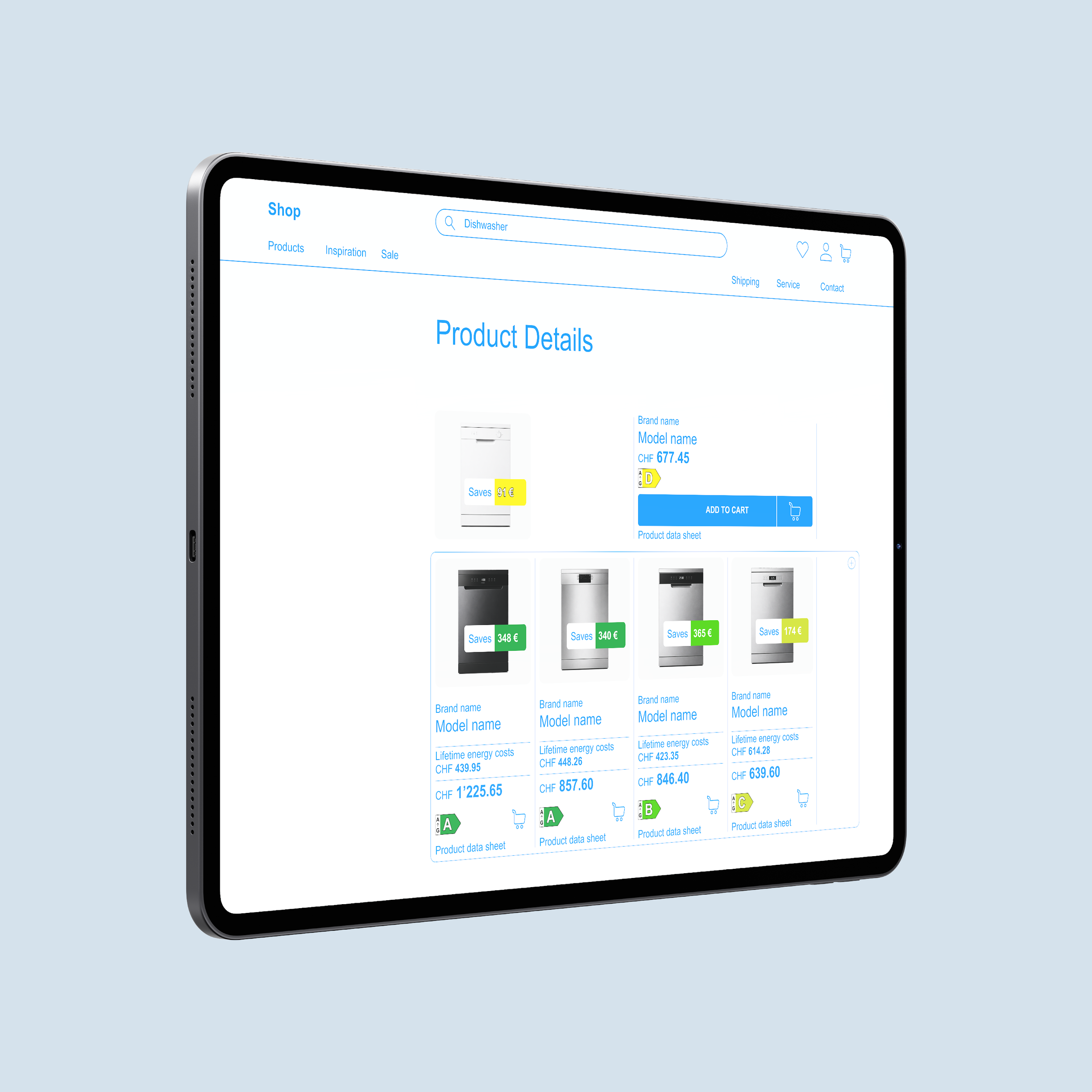
Use this pattern to offer more efficient alternatives directly from the product detail page of less efficient products.
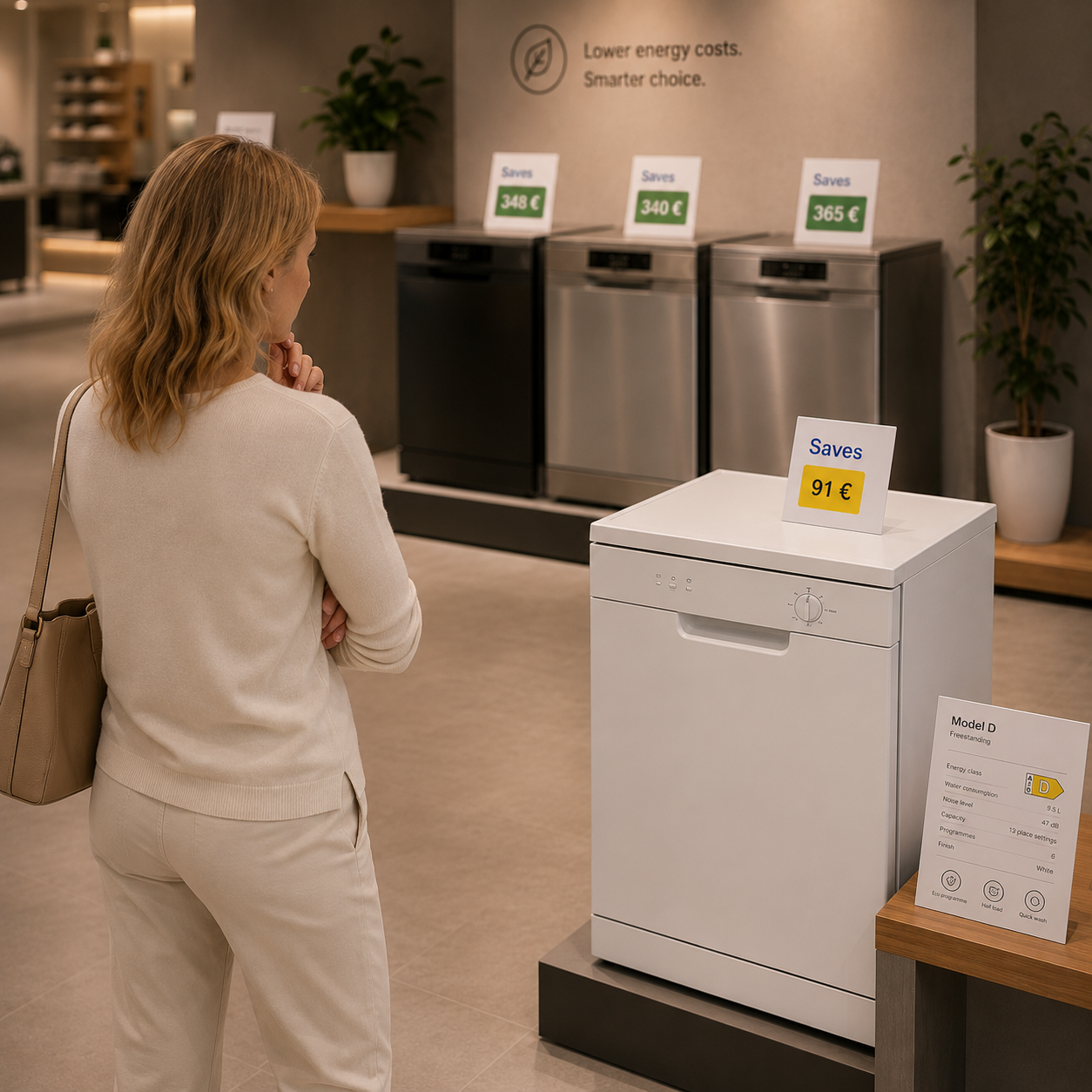
Why? Instead of forcing a comparison journey, this pattern makes the financial benefits of efficiency visible at the exact moment a user is considering a product.
How it works
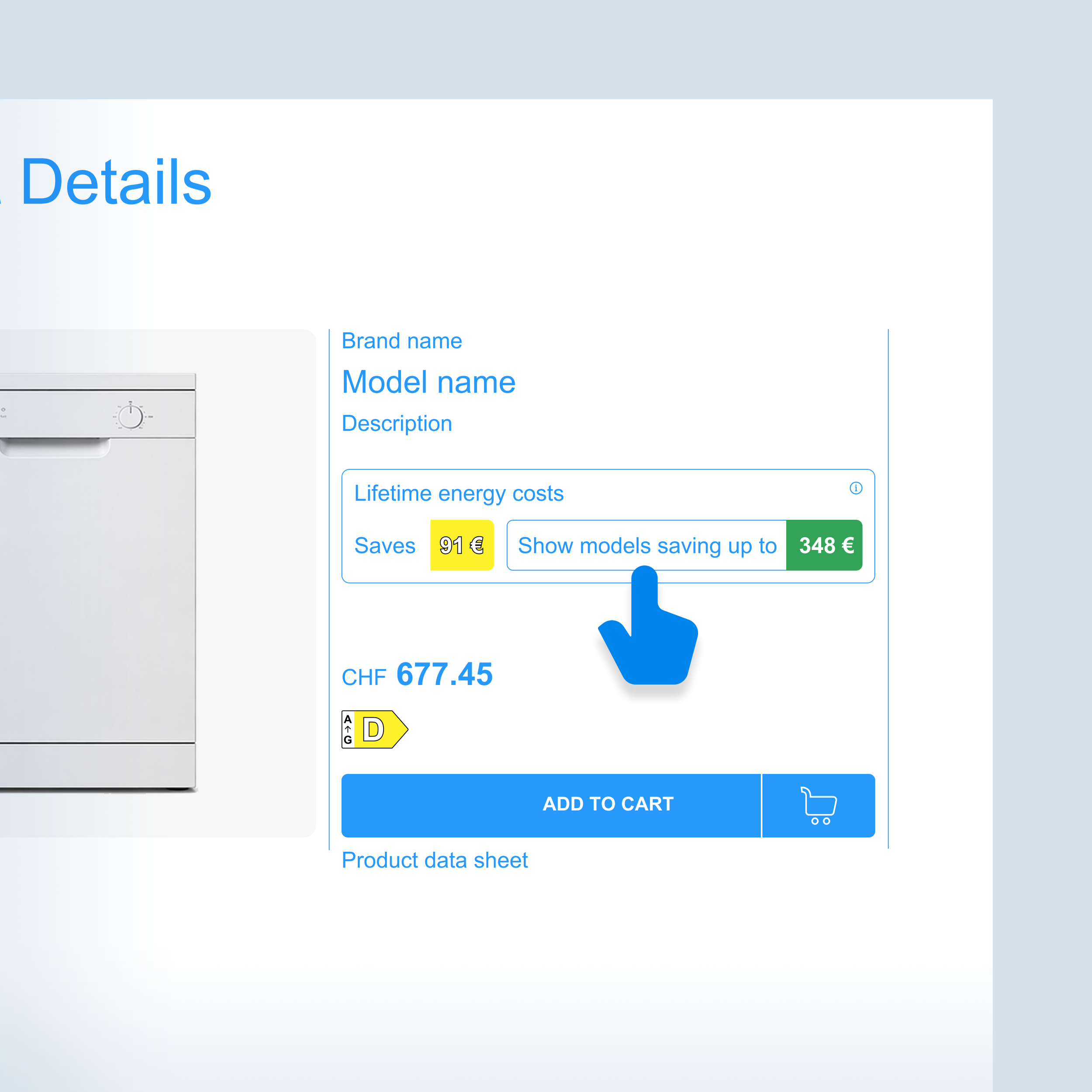
A user views a product with medium or low energy efficiency. A small information module highlights the lifetime energy cost difference compared to more efficient alternatives.
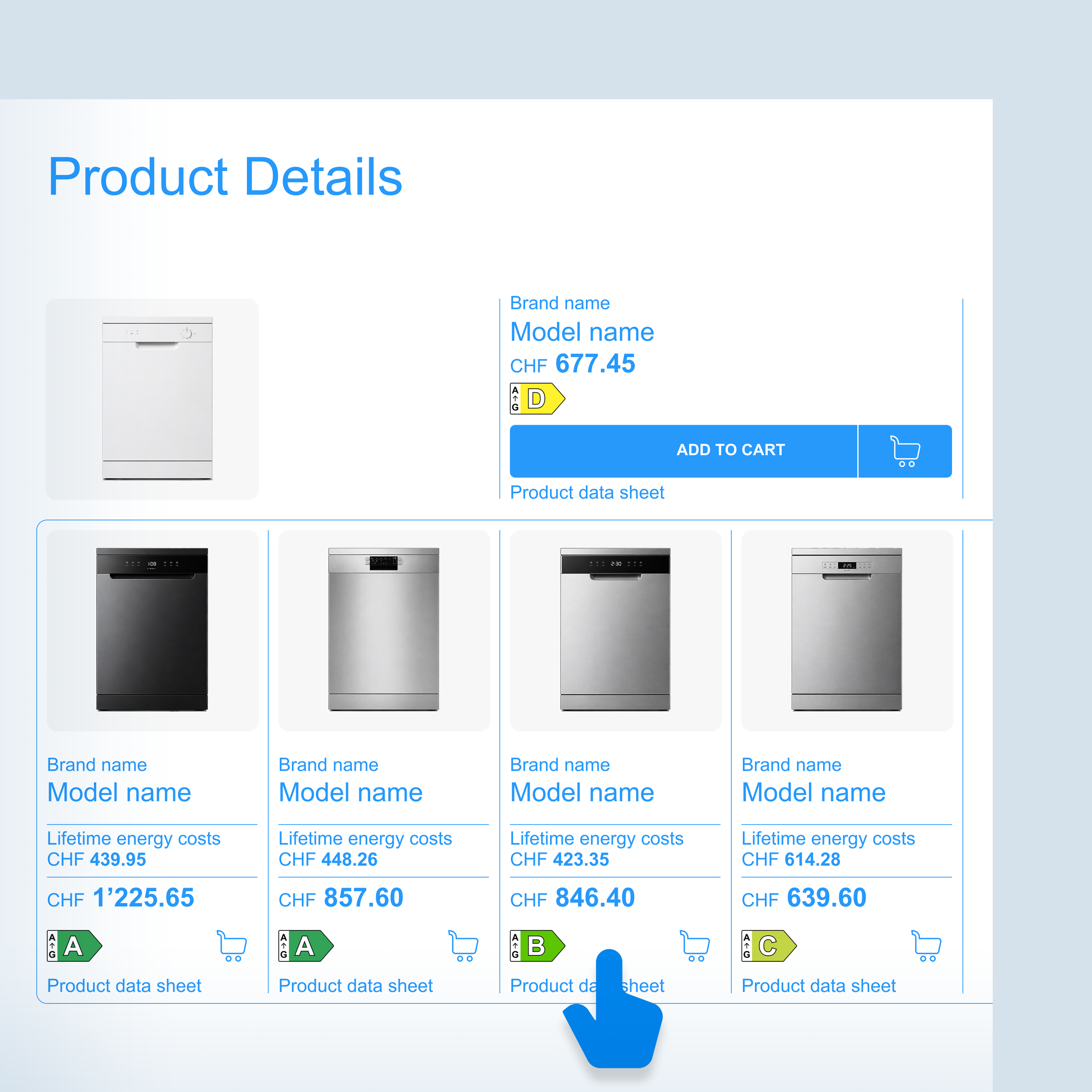
Selecting the teaser expands a recommendation panel showing comparable products together with their potential energy cost savings.
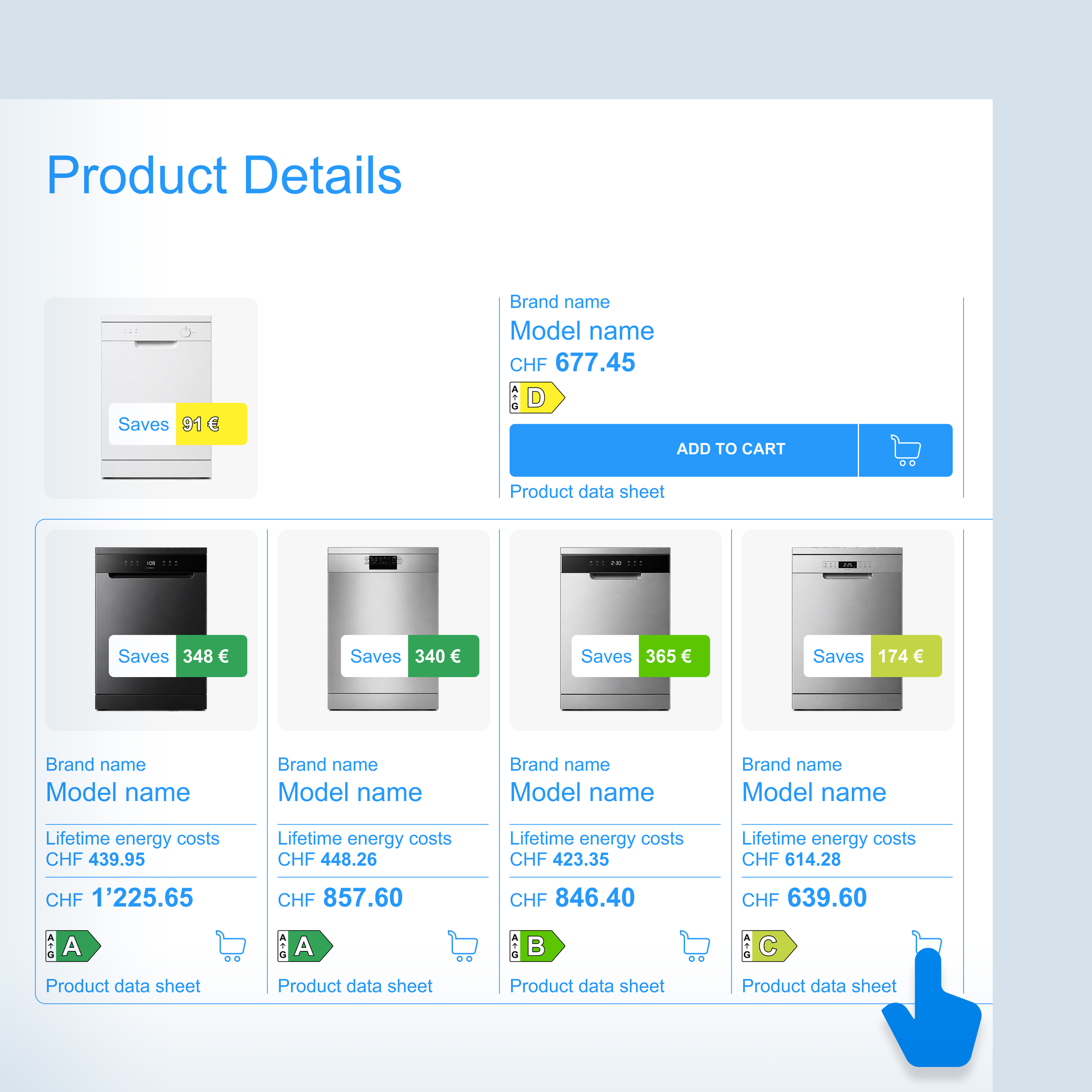
An optional enhancement visualises savings directly on each alternative product card, making the differences easier to scan and compare.
Explore and download this pattern for free
Persona-Based Evaluation
Based on AI-assisted Personas

Progressive Purchaser
Initial perception
The teaser immediately catches attention because it introduces a practical benefit rather than an environmental argument. The savings amount feels concrete and worth investigating. The interaction resembles recommendation patterns commonly found in e-commerce and therefore feels familiar.
Interpretation
The user understands that the retailer is suggesting alternatives based on long-term value rather than simply promoting another product. The connection between efficiency and money becomes visible without requiring detailed knowledge of energy labels.
Effect on decision
Increases curiosity about alternative models
Creates a reason to compare products beyond purchase price
Makes higher efficiency classes appear more attractive
Encourages consideration of total cost of ownership
Can justify spending more upfront for a better product
Friction / risks
Medium. The user may question how the savings are calculated.
Trust increases when assumptions such as electricity price, usage frequency and calculation period are transparent and accessible. The pattern performs best when the suggested alternatives remain comparable in size, features and quality.




Cross-Persona Evaluation
Perceptibility: High
The teaser appears directly next to price and efficiency information on the product detail page. Savings amounts attract attention even when users have little interest in energy labels.
Comprehensibility: High
The basic message is easy to understand: “This product costs more energy over time than some alternatives.” Adding explicit savings figures further reduces cognitive effort.
Motivational Fit:
High: Savvy Economizer, Progressive Purchaser
Medium to High: Casual Conscious Consumer
Conditional: Committed Caretaker
Low to Medium: Novelty Seeker
Decision Impact: Strong
Unlike sorting and filtering patterns, the intervention happens when a user has already selected a product for closer consideration. At this stage, even small pieces of additional information can redirect evaluation and trigger product comparison.
Risk of Backfire: Low to Medium
The pattern remains low-risk when savings calculations are transparent, assumptions are easy to understand, and recommended products are genuinely comparable alternatives.
Expert Evaluation
Score: 9 / 14
**************
Cross-Expert Summary
This pattern reached medium-high acceptance. Experts valued its transparency and its ability to make hidden operating costs visible. It was seen as a useful bridge between energy efficiency and financial relevance.
Experts also appreciated the positive and lightweight framing, but several also considered it too simplified. The pattern therefore was reworked with a detail layer. The concern with this might be friction. If the message feels too complex, negative or calculation-heavy, it may slow down the shopping process.
“Yes, we would implement it because it is framed positively and sparks interest in a better option.”
— Quality Manager Non Food, Online Retailer
Project partners
Funding

Studio Peter Post × Petra Esveld
Studio Peter Post × Petra Esveld is a design studio focussing on ux- and service design for the circular economy and branding for public institutions, NGOs and Non-Profits.
Development

SwissEnergy
SwissEnergy is the Swiss Federal Council’s programme for supporting voluntary measures to improve energy efficiency and promote renewable energy.

Circular-Experience.org
Circular-Experience.org is the circular economy design practice of Studio Peter Post × Petra Esveld, specialising in service design and user experience design for sustainable products and systems.