
Energy Efficiency / Customer Journey Stage 02 / Search for products
Efficiency First Sorting
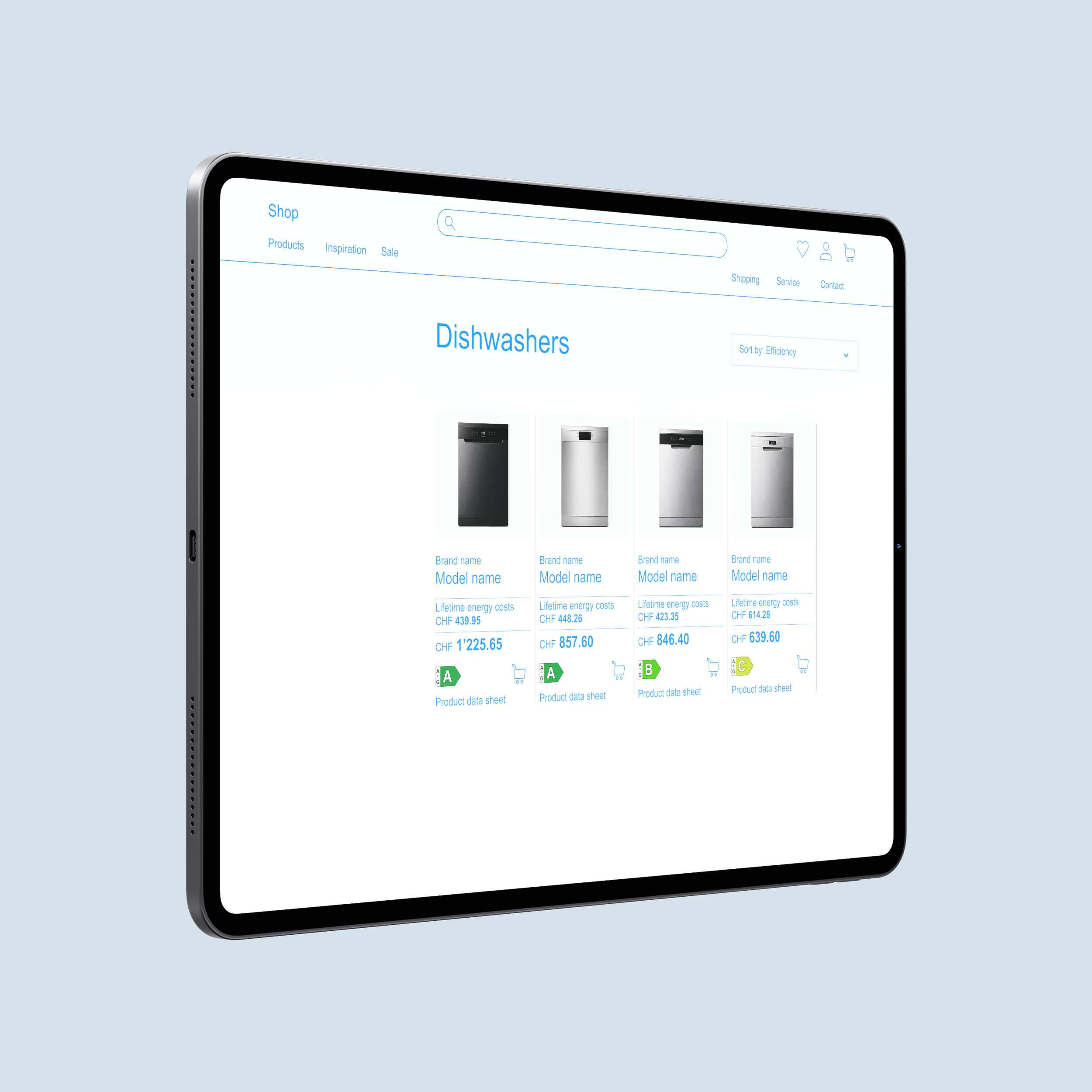
Use this pattern to sort product listings by efficiency by default, framing efficiency as the first priority while keeping all alternatives accessible.
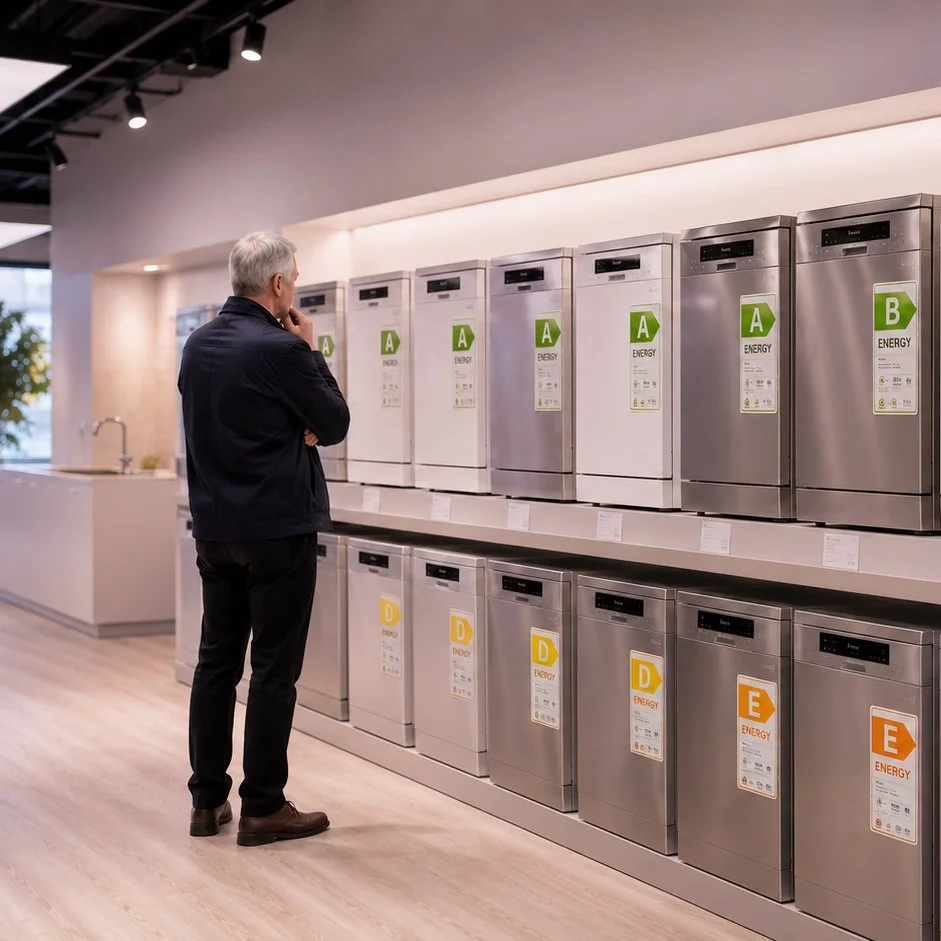
Why? Product presentations cannot be not sorted. Retailers always sort with intent. Choosing efficiency as the sorting principle benefits the visibility of high-quality products.
How it works
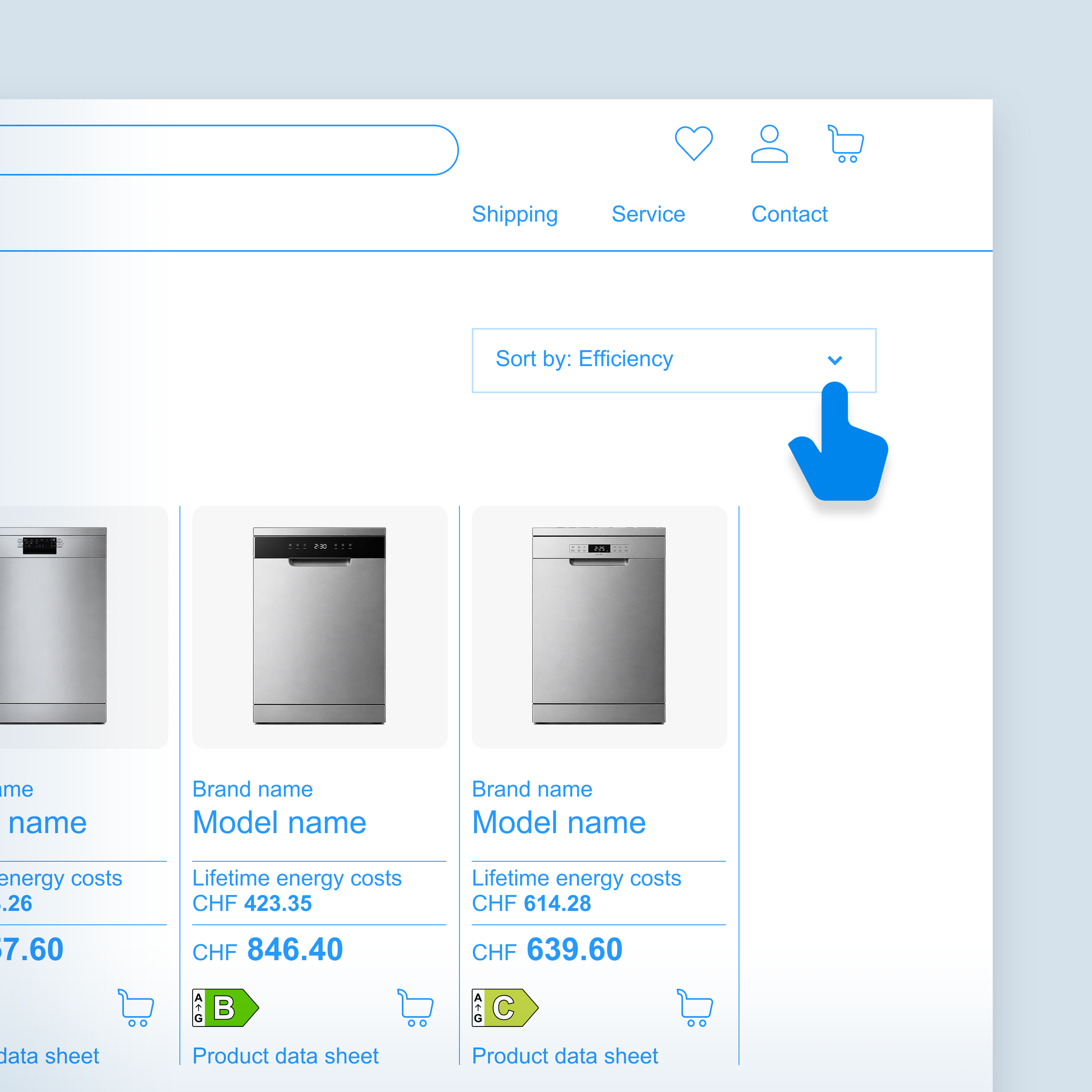
The listing is sorted by efficiency by default. Less efficient products are listed, but appear towards the end of the listing.
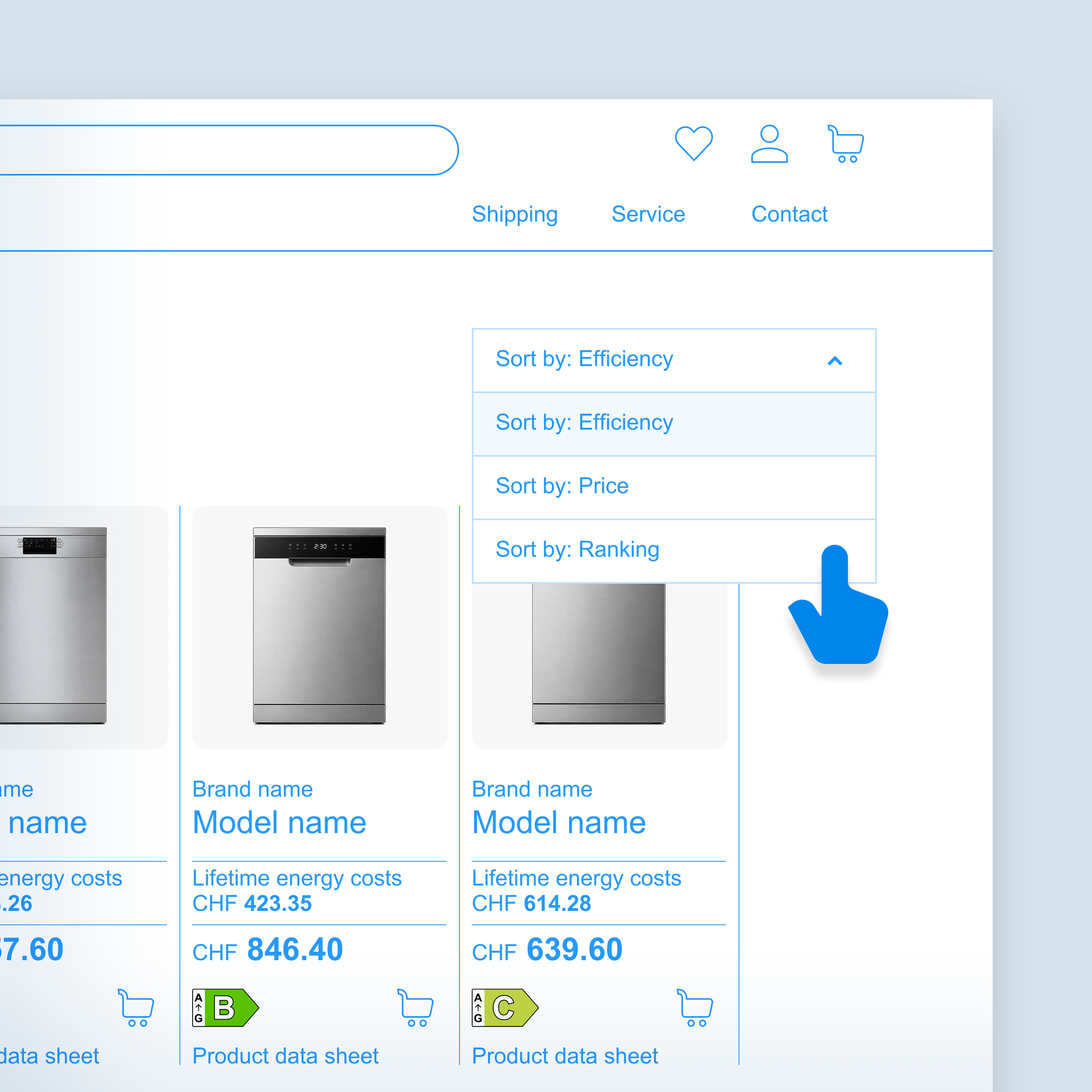
Other sorting options are available via dropdown.

With a different sorting, also less efficient products may become visible at the top of the listing.
Explore and download this pattern for free
Persona-Based Evaluation
Based on AI-assisted Personas

Committed Caretaker
Initial perception
Immediately understands that the shop is prioritizing efficient appliances. The default sorting feels intentional, responsible and aligned with her own values.
Interpretation
Reads the sorting logic as a signal that the retailer takes energy consumption seriously. Unlike a filter, the pattern does not feel restrictive because all products remain visible.
Effect on decision
Increases trust in the retailer
Reduces search effort
Makes efficient products feel like the normal starting point
Strengthens confidence in choosing a Class A appliance
Friction / risks
Low
Would appreciate a short explanation of why products are ordered this way
Risk remains low because the sorting can be changed




Cross-Persona Evaluation
Perceptibility: Medium to High
The sorting label is visible, but less prominent than an active filter. Some users may not notice that efficiency is shaping the list.
Comprehensibility: High
Once noticed, the mechanism is easy to understand: products are ordered by efficiency.
Motivational Fit:
High: Committed Caretaker, Casual Conscious Consumer
Medium: Progressive Purchaser
Conditional: Savvy Economizer
Low to neutral: Novelty Seeker
Decision Impact:
Strong as an early-stage framing mechanism.
Weaker as a standalone motivator unless paired with cost, quality or performance benefits.
Risk of Backfire
Low to medium.
Low when reversible and transparent.
Medium if users suspect that “efficiency” is being used as a disguised retailer ranking.
Expert Evaluation
Score: 7 / 14
**************
Cross-Expert Summary
This pattern received conditional acceptance. Manufacturers with premium or efficiency-oriented positioning saw a clear fit, especially where energy efficiency supports brand value. Retail-oriented experts were more cautious because default sorting can interfere with commercial logic, especially price and availability.
The pattern seems most implementable when used in specific contexts, such as sustainability-related entry points, search campaigns or product categories where efficiency is already a strong purchase criterion. As a general default across a shop, acceptance is weaker.
“Yes, we would use it depending on the product category: for dishwashers, for example, it makes sense. For lighting products, it does not, because their energy efficiency hardly differs.”
– Quality Manager Non-Food, Retail
Project partners
Funding

Studio Peter Post × Petra Esveld
Studio Peter Post × Petra Esveld is a design studio focussing on ux- and service design for the circular economy and branding for public institutions, NGOs and Non-Profits.
Development

SwissEnergy
SwissEnergy is the Swiss Federal Council’s programme for supporting voluntary measures to improve energy efficiency and promote renewable energy.

Circular-Experience.org
Circular-Experience.org is the circular economy design practice of Studio Peter Post × Petra Esveld, specialising in service design and user experience design for sustainable products and systems.