
Energy Efficiency / Customer Journey Stage 01 / Need Recognition
Anchoring
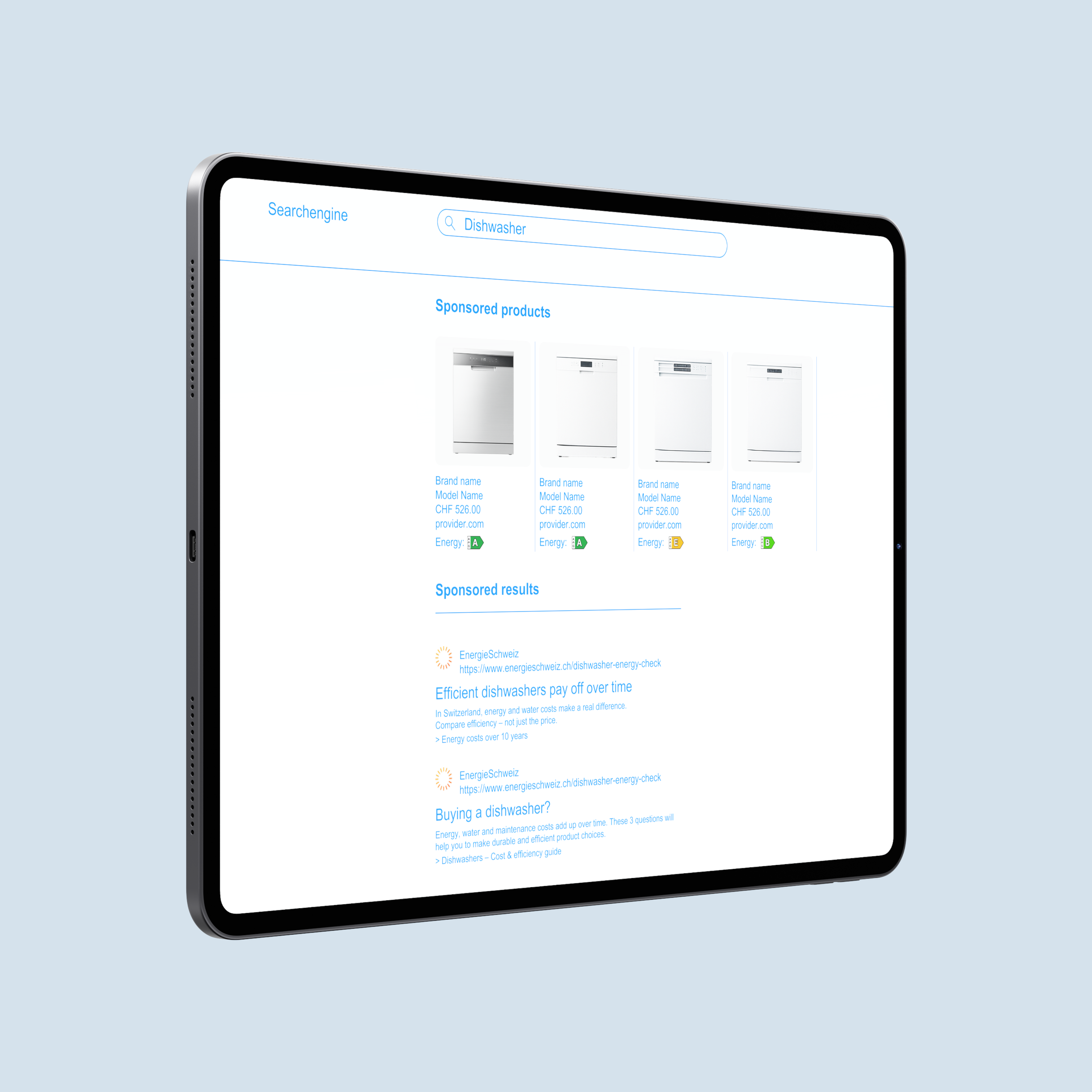
Use sponsored search ads to reframe product evaluation before users enter an online shop by introducing lifetime costs as a key decision criterion.
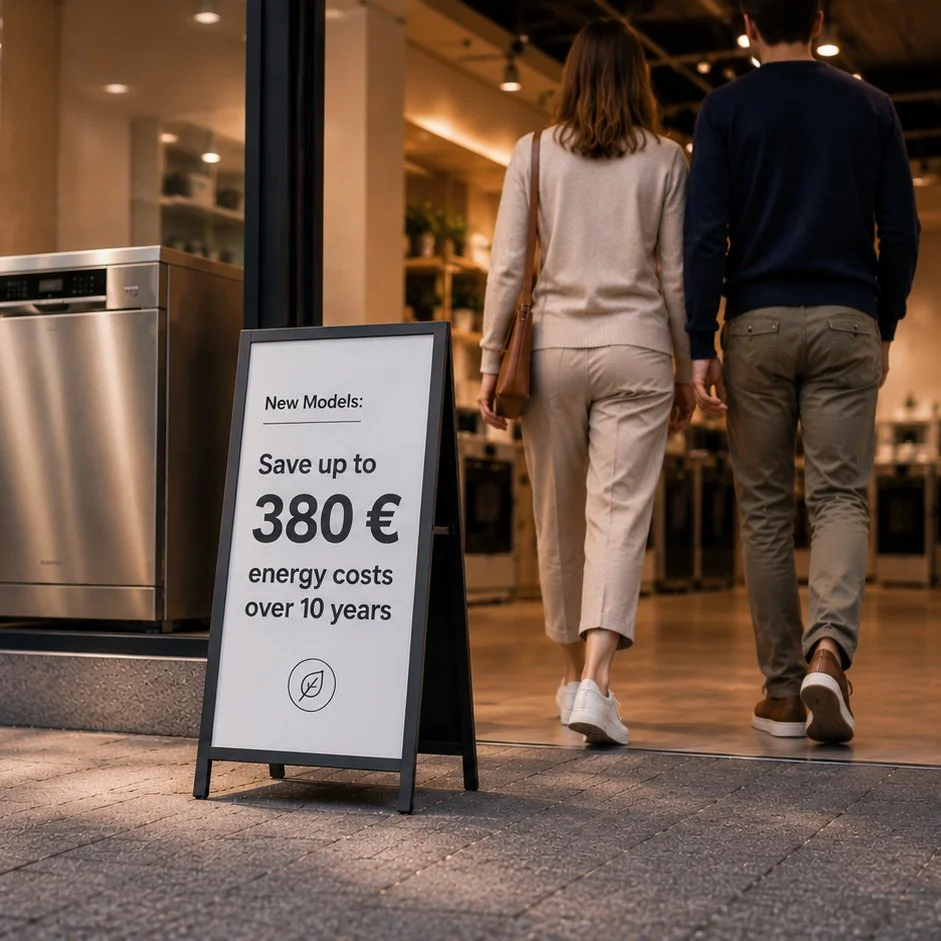
Why? The pattern intervenes before users begin detailed product evaluation, shaping the criteria they use for all subsequent decisions.
How it works
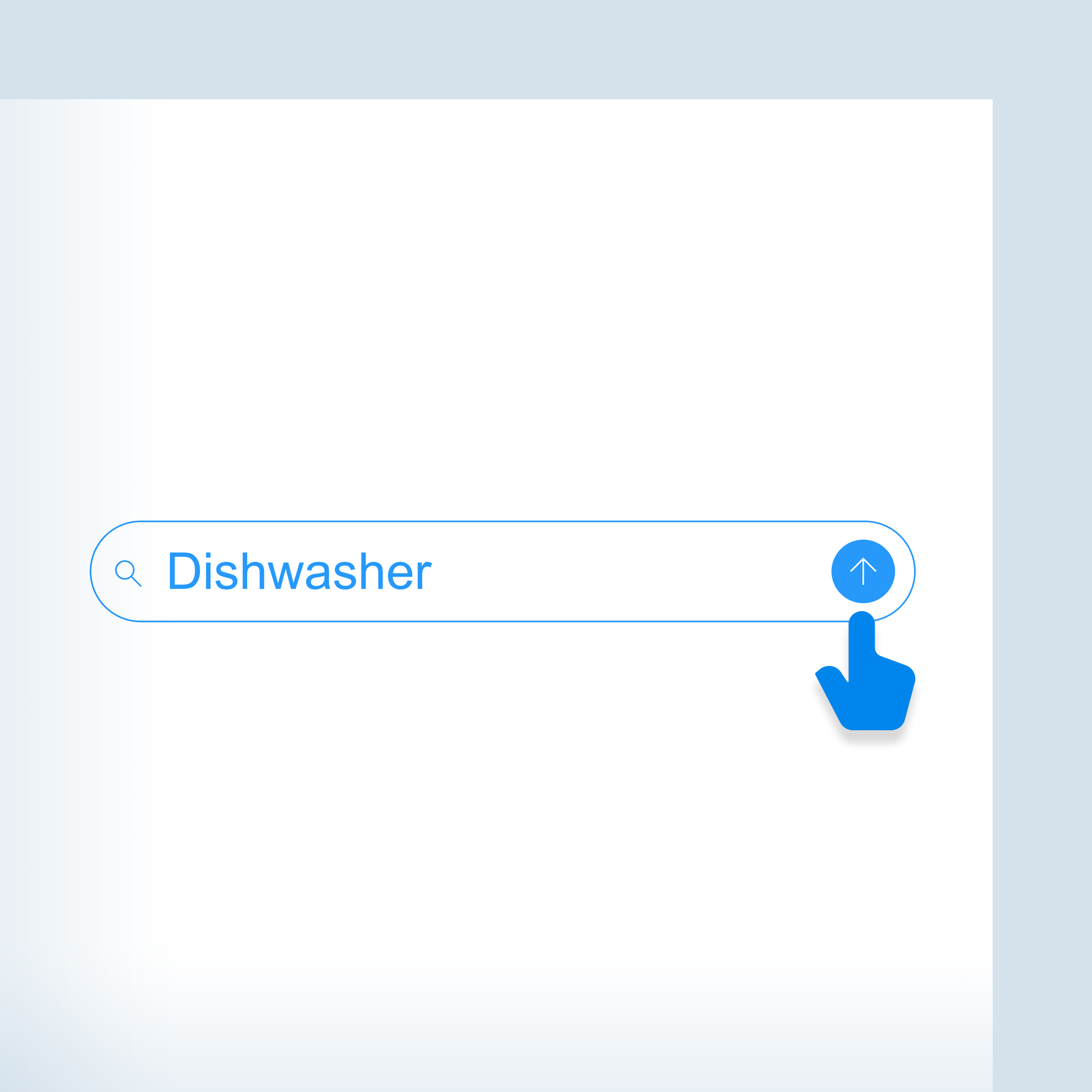
A user searches for a product category such as “dishwasher”, either for repair of a broken appliance or purchase of a new one.
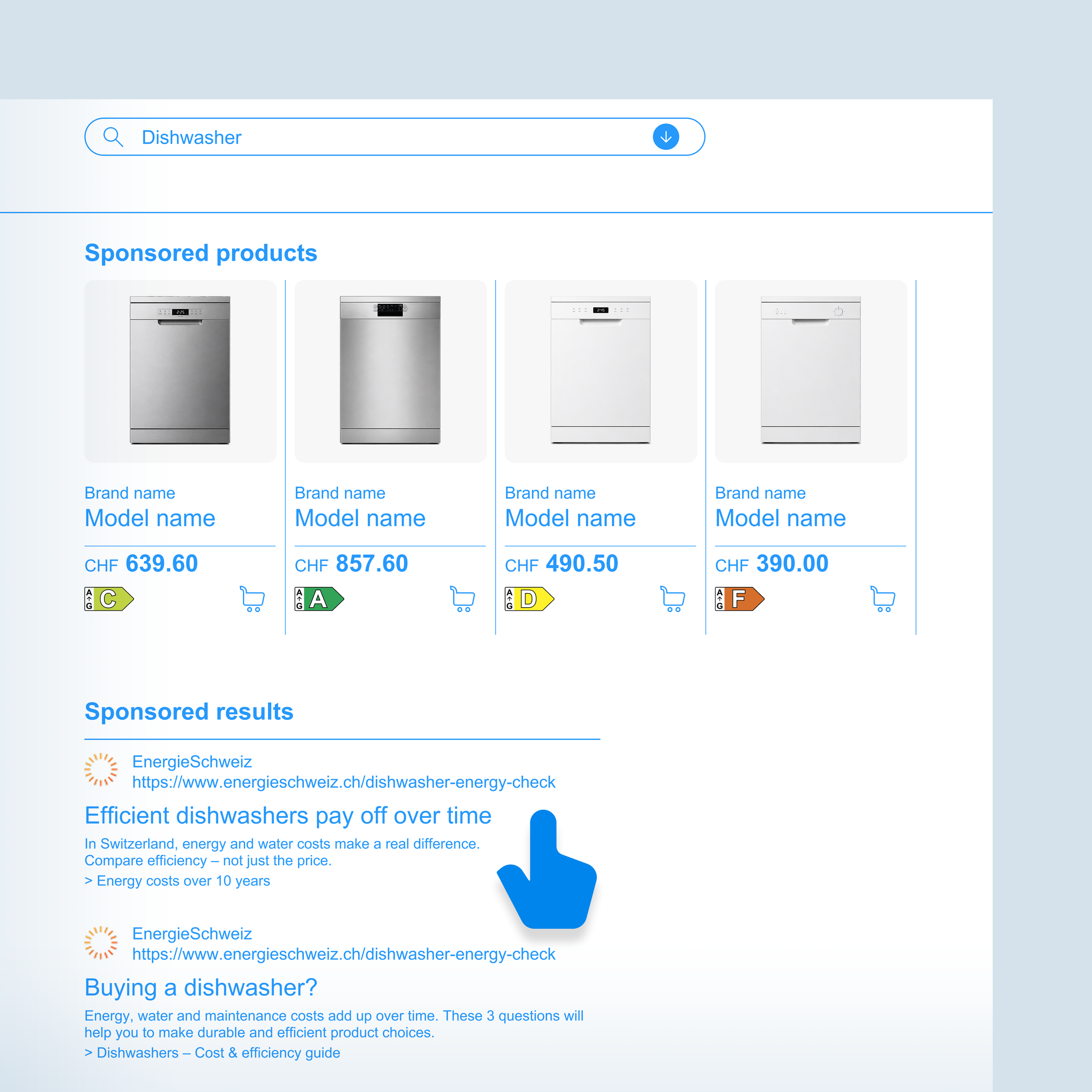
Alongside sponsored product ads, sponsored educational ads highlight the long-term cost implications of appliance efficiency.
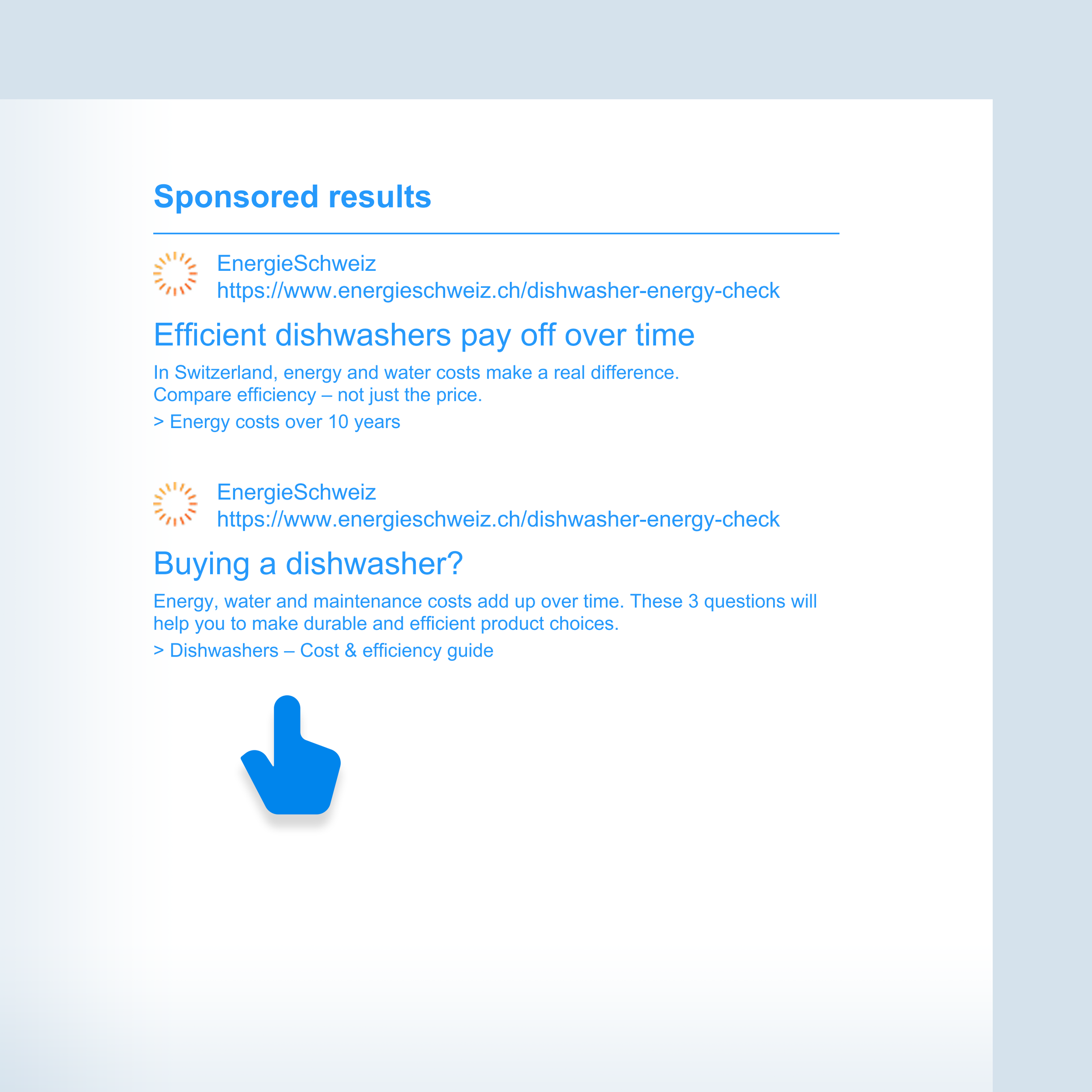
To be trustworthy, these ads should be posted by public institutions or consumer organizations and link to independent landing pages.
Explore and download this pattern for free
Persona-Based Evaluation
Based on AI-assisted Personas

Savvy Economizer
Initial perception
The message immediately attracts her attention because it promises financial relevance. Unlike sustainability-focused messages, the headline addresses a topic she already cares about: saving money.
Interpretation
She interprets the sponsored result as practical consumer advice rather than advertising. The suggestion that energy costs can outweigh initial price differences feels plausible and worth investigating.
Effect on decision
Encourages a broader cost comparison
Increases likelihood of considering Class A and B appliances
Creates motivation to calculate payback periods
Makes efficiency appear financially rational rather than environmentally driven
Increases confidence when choosing a more expensive but efficient model
Friction / risks
Low.
The pattern succeeds as long as calculations remain transparent and credible. Exaggerated savings claims or unclear assumptions would quickly undermine trust.




Cross-Persona Evaluation
Perceptibility: High
The intervention appears directly within search results at a moment of active product research. Visibility is strong and independent of retailer implementation.
Comprehensibility: High
The core message is straightforward: purchase price is only one part of the total cost. Most users understand the proposition immediately.
Motivational Fit:
High: Savvy Economizer, Progressive Purchaser
Medium to High: Casual Conscious Consumer
Conditional: Committed Caretaker
Low to Medium: Novelty Seeker
Decision Impact:
Potentially strong because it operates before retailer selection and before product comparison begins.
Rather than influencing a single choice, the pattern can change the evaluation framework applied throughout the entire purchase journey.
Risk of Backfire
Low to Medium.
Low when delivered by trusted public-interest organizations and supported by transparent calculations.
Medium if users perceive the content as hidden advertising or advocacy unsupported by evidence.
Expert Evaluation
This pattern was not included in the expert evaluation with manufacturers and online retailers, as it would typically be implemented by independent actors such as public institutions, consumer organizations or energy agencies rather than commercial sellers themselves.
Project partners
Funding

Studio Peter Post × Petra Esveld
Studio Peter Post × Petra Esveld is a design studio focussing on ux- and service design for the circular economy and branding for public institutions, NGOs and Non-Profits.
Development

SwissEnergy
SwissEnergy is the Swiss Federal Council’s programme for supporting voluntary measures to improve energy efficiency and promote renewable energy.

Circular-Experience.org
Circular-Experience.org is the circular economy design practice of Studio Peter Post × Petra Esveld, specialising in service design and user experience design for sustainable products and systems.