
Energy Efficiency / Customer Journey Stage 04 / Alternative Recommendation
Alternative Recommendation
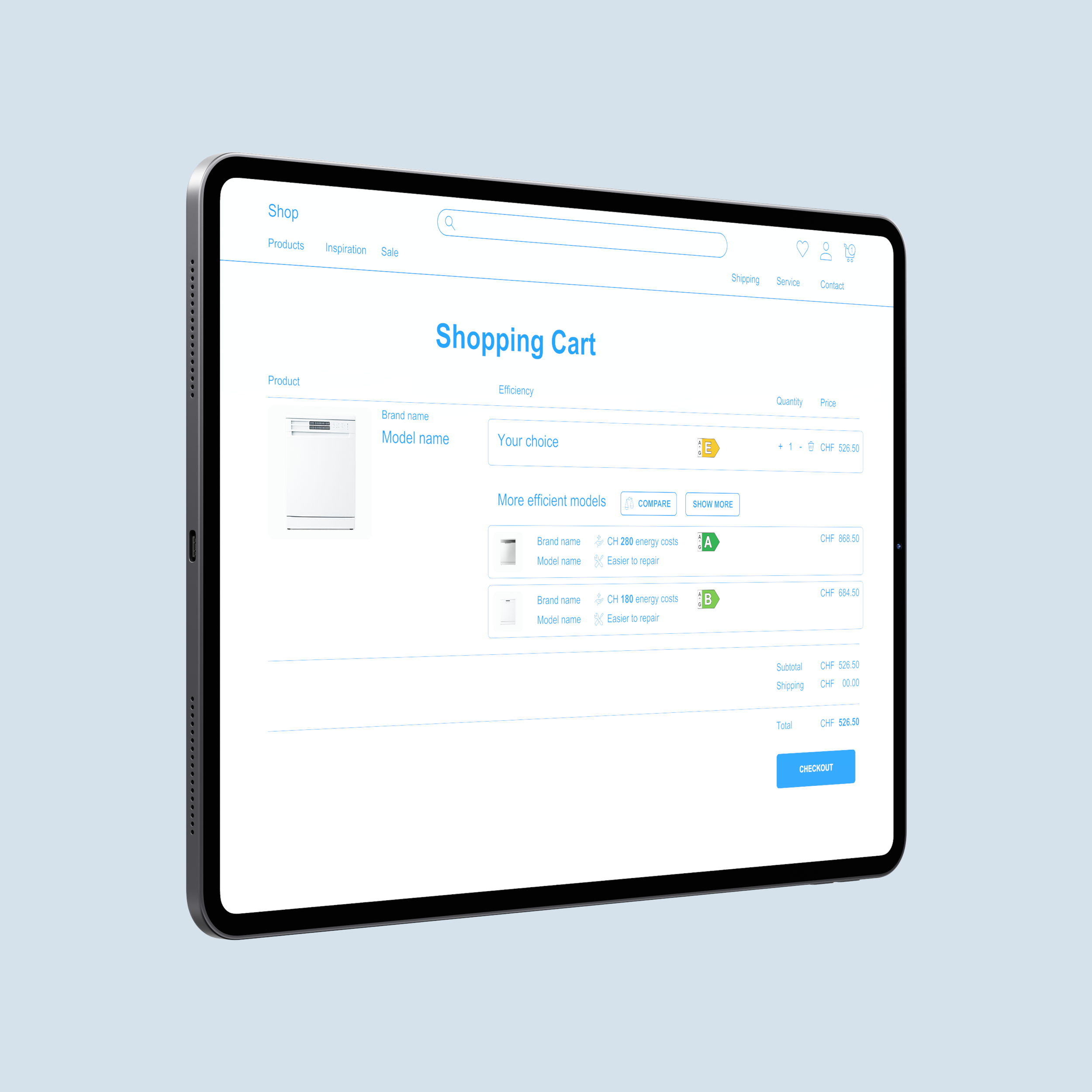
Use this pattern to suggest more efficient alternatives directly in the shopping cart when a lower-efficiency product has already been selected.
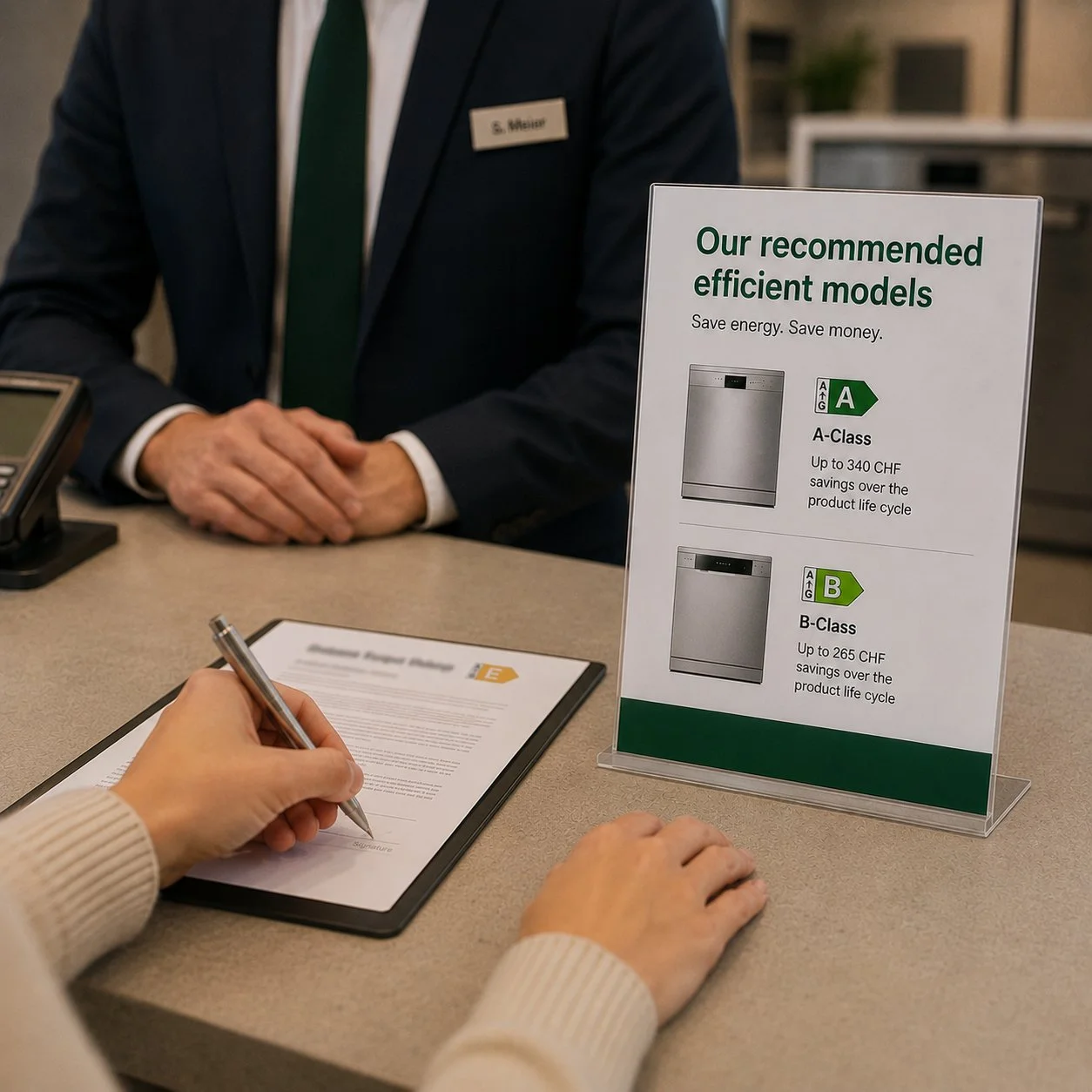
Why? The shopping cart creates a final moment of reflection for users whether to complete the purchase. Presenting more efficient alternatives allows reconsideration without forcing a restart of the shopping journey.
How it works
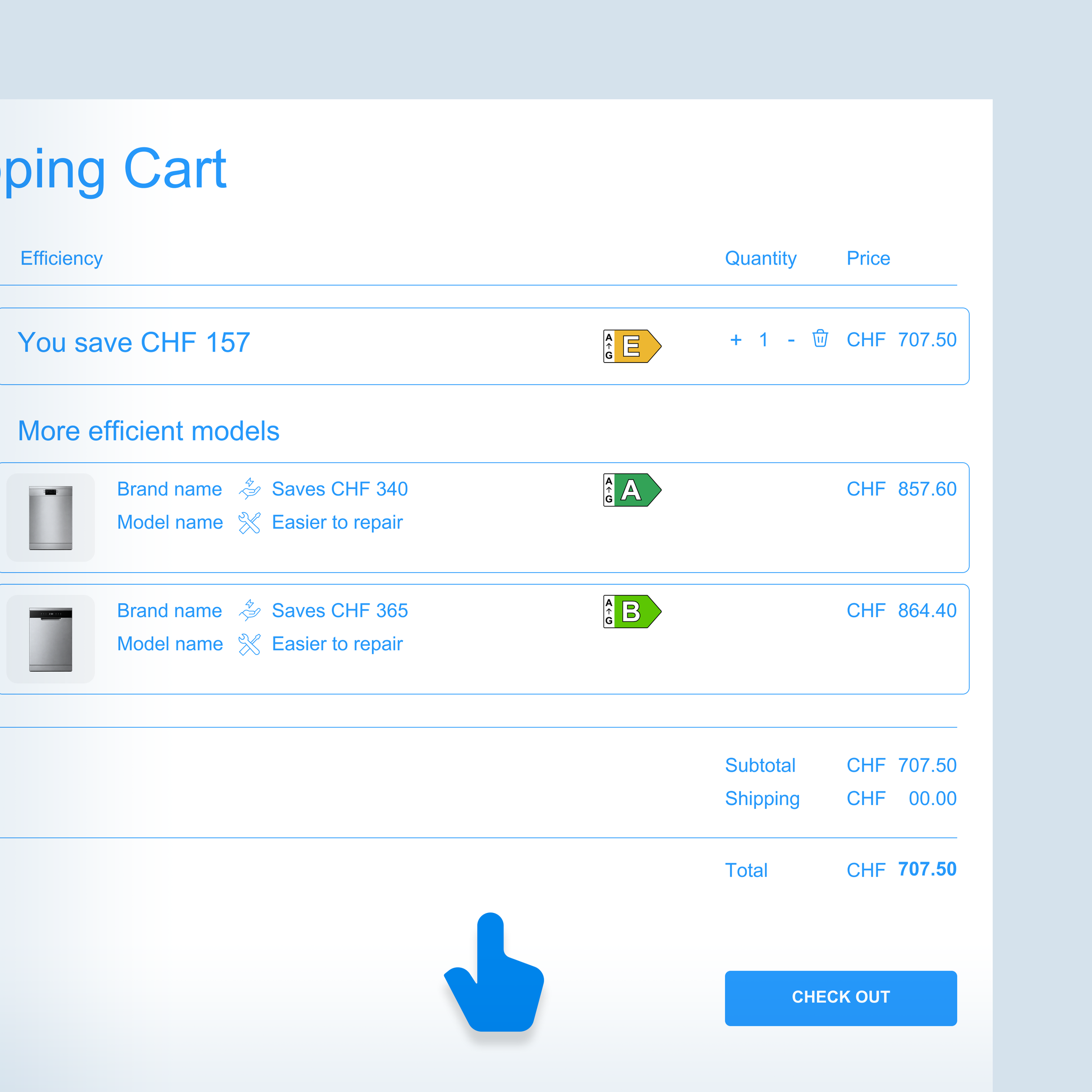
A user has added a lower-efficiency product to the cart. The cart calculates the energy savings of the selected model and recommends comparable products with higher efficiency classes.
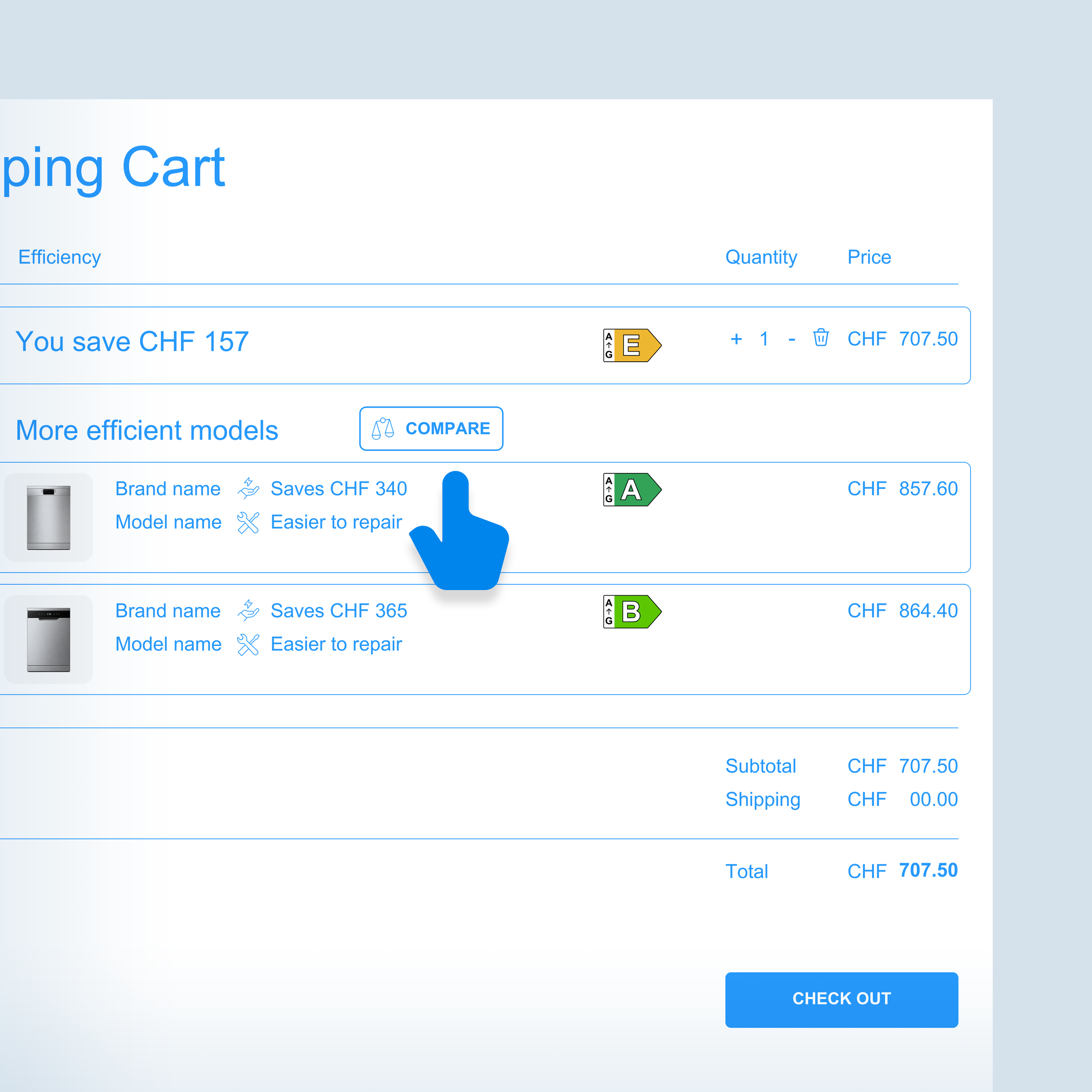
An additional feature could be the option to compare products. The original product remains in the cart, preserving user autonomy.
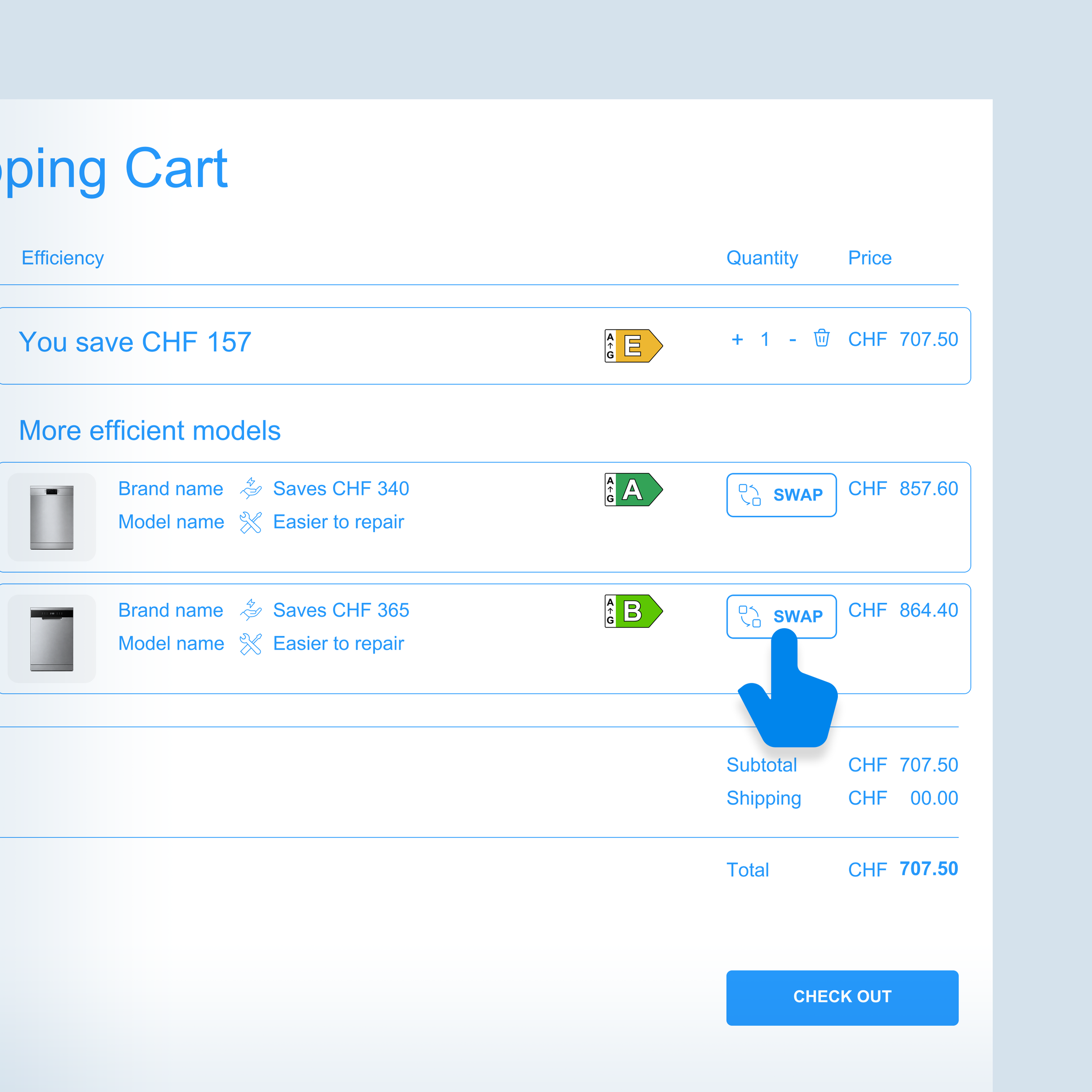
To make the pattern even more actionable, the user could be offered the option to replace the selected product with a single click.
Explore and download this pattern for free
Persona-Based Evaluation
Based on AI-assisted Personas

Casual Conscious Consumer
Initial perception
The recommendation feels useful rather than intrusive. The customer has already chosen a product and therefore pays more attention to information that might improve the decision.
Interpretation
The efficient alternatives are presented as better options rather than corrections. The savings information makes the recommendation easy to understand, while repairability adds a quality signal beyond energy efficiency.
Effect on decision
Creates curiosity about alternatives
Increases consideration of Class A and B products
Makes efficiency benefits tangible
Reduces the effort required to revisit the decision
Can trigger a switch when the price difference feels reasonable
Friction / risks: Low
The pattern remains supportive because the original product stays in the cart and the recommendation is clearly related to the selected product. Trust decreases if recommendations appear unrelated or primarily motivated by higher margins.




Cross-Persona Evaluation
Perceptibility: High
The pattern appears directly inside the shopping cart, one of the most attention-rich moments of the purchase journey. Most users are likely to notice it.
Comprehensibility: High
The recommendation logic is easy to understand. Users can immediately see that the alternatives offer higher efficiency and specific benefits such as lower energy costs or better repairability.
Motivational Fit
High: Casual Conscious Consumer, Committed Caretaker
Medium to High: Progressive Purchaser
Conditional: Savvy Economizer
Low to Medium: Novelty Seeker
Decision Impact: Potentially Strong
Unlike search filters or sorting mechanisms, the pattern intervenes after product selection when users already have a concrete reference product. This makes the comparison highly relevant and can create meaningful switching behaviour toward more efficient models.
Risk of Backfire: Low to Medium
Low when recommendations are genuinely comparable and savings calculations are transparent. Medium when users perceive the recommendations as disguised upselling or when price differences appear disproportionate to the promised benefits.
Expert Evaluation
Score: 7 / 14
**************
Cross-Expert Summary
Acceptance was conditional. Experts liked the intention of offering a more efficient alternative, but many saw risk in reopening the decision in the cart.
The pattern can trigger doubt, comparison fatigue or delay. It is more plausible earlier in the journey, where customers are still actively comparing products. In checkout, it needs to be extremely lightweight and clearly beneficial. The main issue is overload. The pattern would need modularization and strict prioritization.
Experts saw some value in the direct swap idea, but several argued that users need more information before replacing a product already placed in the cart.
“Offering a comparison with more energy-efficient alternatives to the user’s selection is a good idea.”
— Head of Innovation, Manufacturer
Project partners
Funding

Studio Peter Post × Petra Esveld
Studio Peter Post × Petra Esveld is a design studio focussing on ux- and service design for the circular economy and branding for public institutions, NGOs and Non-Profits.
Development

SwissEnergy
SwissEnergy is the Swiss Federal Council’s programme for supporting voluntary measures to improve energy efficiency and promote renewable energy.

Circular-Experience.org
Circular-Experience.org is the circular economy design practice of Studio Peter Post × Petra Esveld, specialising in service design and user experience design for sustainable products and systems.