
Energy Efficiency / Customer Journey Stage 01 / Need Recognition
Agentic AI
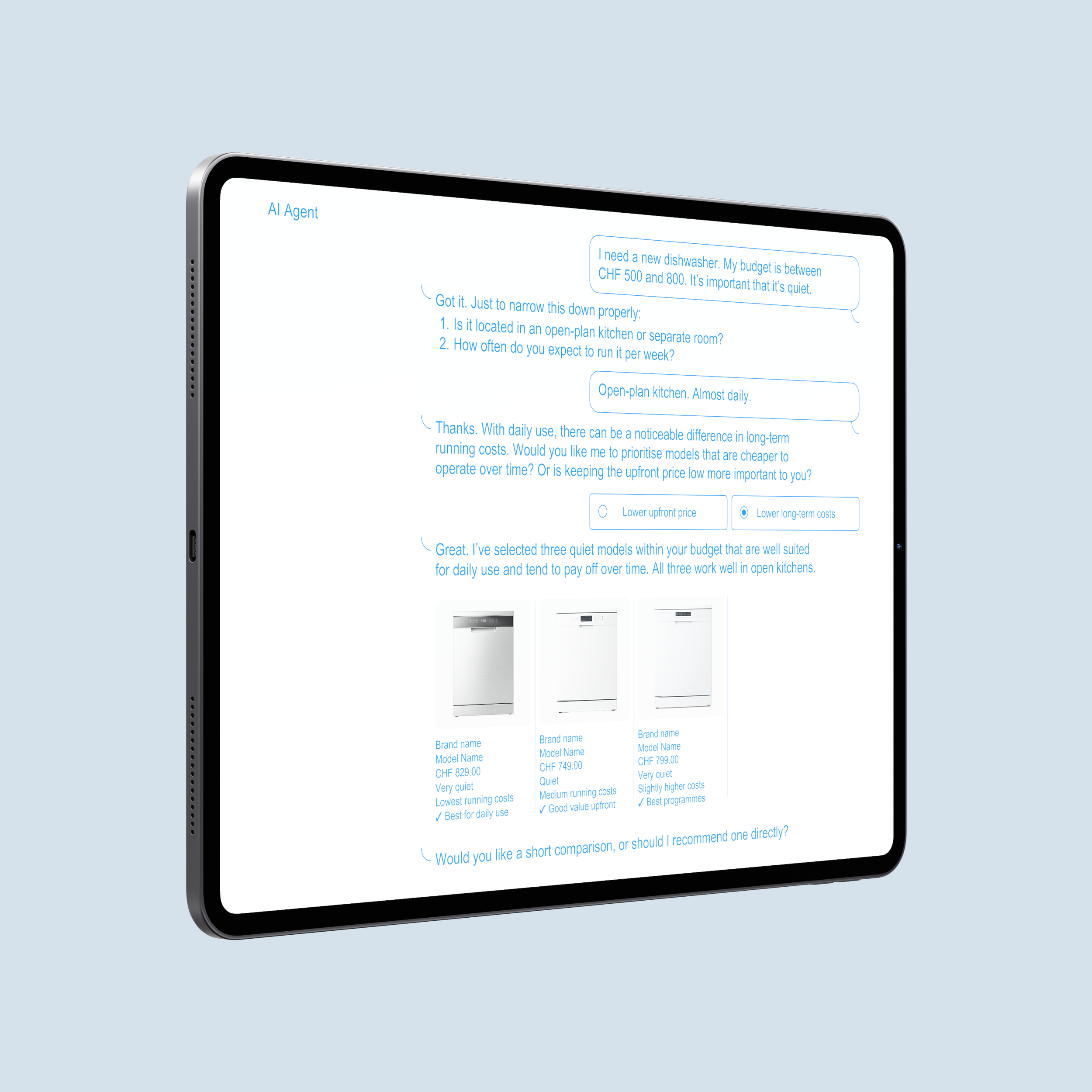
Enable AI assistants to actively introduce energy efficiency into purchase conversations by making product data machine-readable and contextualised.
Why? As shopping shifts from browsing websites to interacting with AI assistants, influence moves away from visual interfaces and towards recommendation logic.
How it works

The user starts a purchase conversation with an AI assistant.
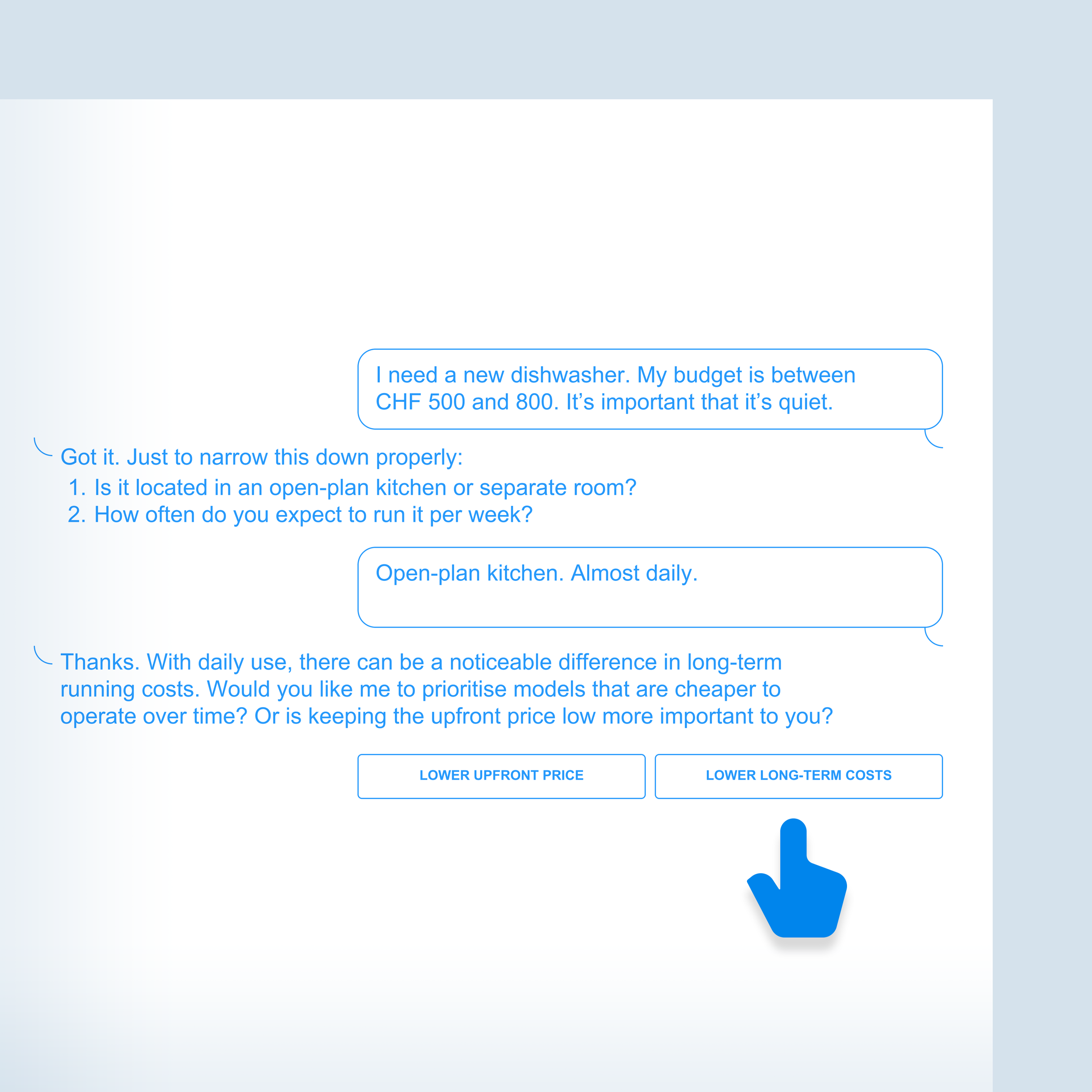
The assistent asks contextual questions about usage patterns and identifies situations where energy consumption may become economically relevant. Based on these factors, the AI introduces a trade-off between upfront price and long-term operating costs.
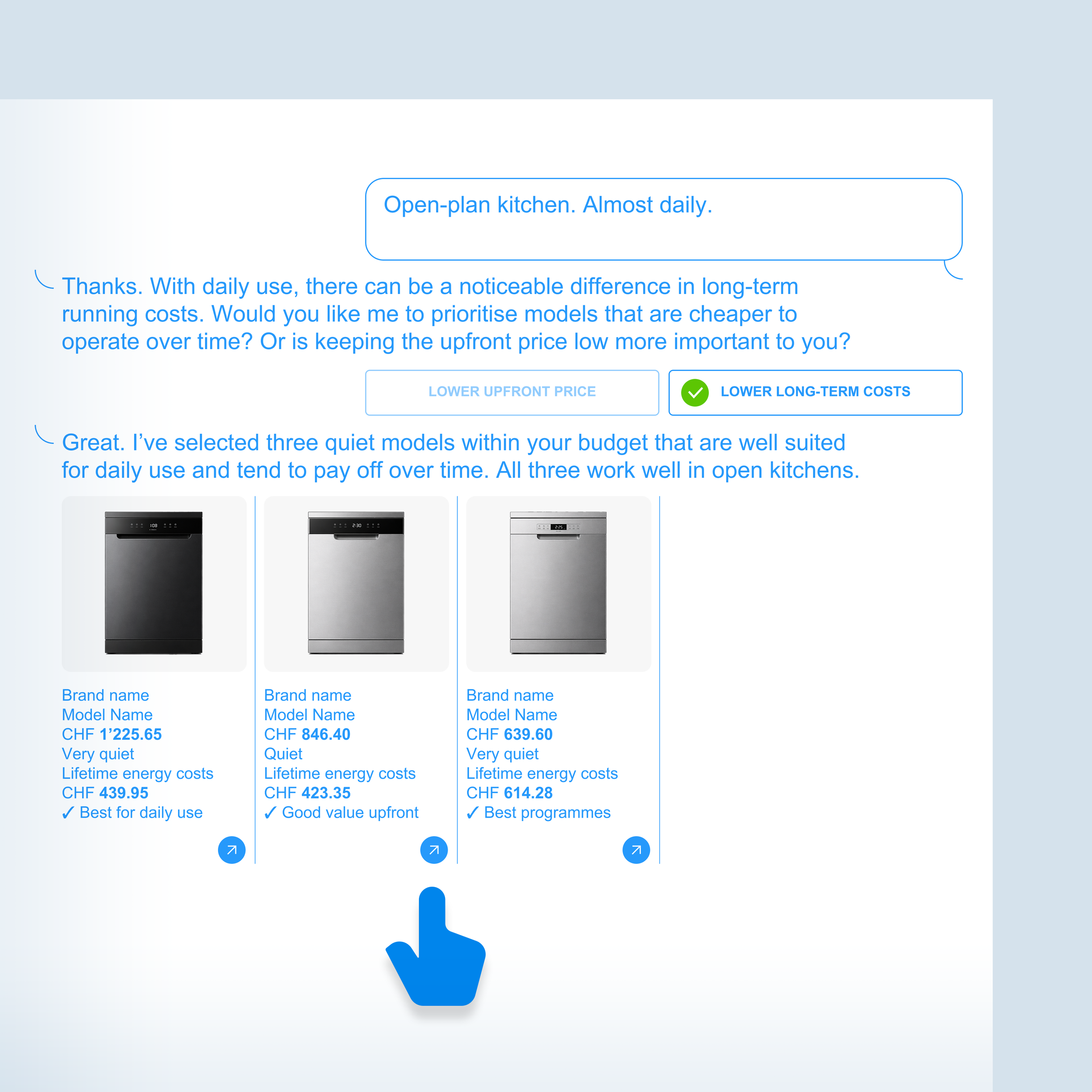
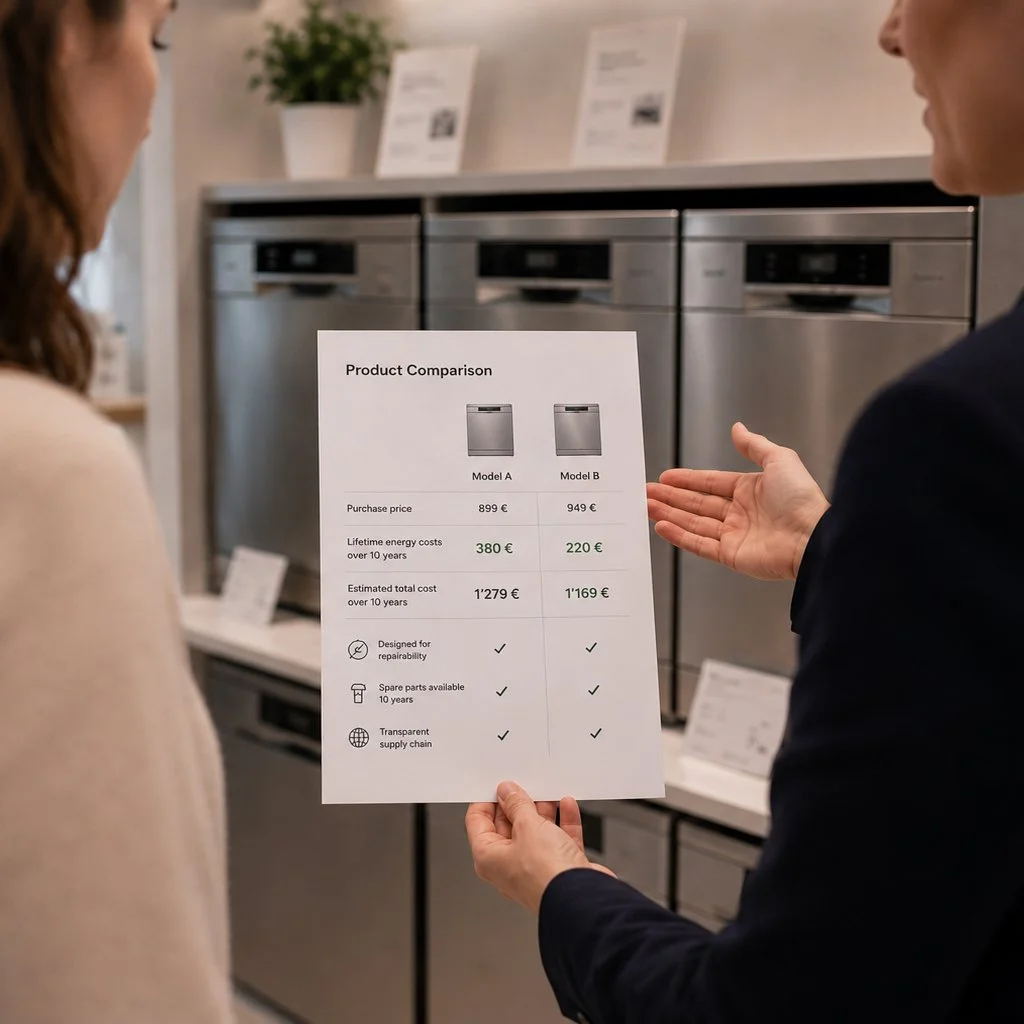
For this to happen, manufacturers and retailers must publish efficiency-related product data in machine-readable formats and provide contextual information that explains when and why efficiency matters. AI systems can then retrieve, interpret and use this information during recommendation processes.
Explore and download this pattern for free
Persona-Based Evaluation
Based on AI-assisted Personas

Savvy Economizer
Initial perception
The conversation immediately feels useful because the AI starts with practical questions rather than presenting products.
Interpretation
Elena understands the discussion about operating costs as financially relevant information rather than sustainability messaging.
The question about daily usage creates a clear connection between her personal situation and future costs.
Effect on decision
Makes lifetime costs visible without requiring calculations
Supports rational comparison of alternatives
Increases confidence in paying more upfront when savings are plausible
Reduces effort needed to compare products manually
Friction / risks
Medium.
Elena may question how the AI calculated long-term costs and whether assumptions are realistic.
Trust increases significantly when calculations and data sources can be inspected.




Cross-Persona Evaluation
Perceptibility: High
The pattern is impossible to overlook because it becomes part of the conversation itself rather than a separate interface element.
Comprehensibility: High
The dialogue structure helps users understand why efficiency matters in their specific situation.
Motivational Fit:
Very High: Savvy Economizer, Committed Caretaker
High: Casual Conscious Consumer
Medium: Progressive Purchaser
Low to Medium: Novelty Seeker
Decision Impact:
Potentially very strong. Unlike filters or labels, the pattern actively shapes which evaluation criteria enter the decision process. It can influence users before product comparisons are formed and before purchase preferences become fixed.
Risk of Backfire
Medium. Users may resist recommendations if they perceive the AI as steering decisions or promoting hidden agendas. Transparency regarding data sources, assumptions and recommendation logic is therefore critical.
Expert Evaluation
Score: 12 / 14
**************
Cross-Expert Summary
Experts rated this pattern very highly, not because agentic commerce is already mainstream, but because it points toward a strategically important future direction. Several participants linked its potential to better use of structured product data and AI-driven recommendation systems.
Manufacturers generally saw the pattern as easier to support than retailers because they already hold much of the required efficiency data. However, they noted that these data are often scattered across internal silos.
Several experts called for official standards or common guidelines to help make product data accessible and usable for AI assistants and future recommendation systems.
“This aligns with our marketing and brand positioning, so we also have the necessary data available.”
— Lead UX Designer, Manufacturer
Project partners
Funding

Studio Peter Post × Petra Esveld
Studio Peter Post × Petra Esveld is a design studio focussing on ux- and service design for the circular economy and branding for public institutions, NGOs and Non-Profits.
Development

SwissEnergy
SwissEnergy is the Swiss Federal Council’s programme for supporting voluntary measures to improve energy efficiency and promote renewable energy.

Circular-Experience.org
Circular-Experience.org is the circular economy design practice of Studio Peter Post × Petra Esveld, specialising in service design and user experience design for sustainable products and systems.